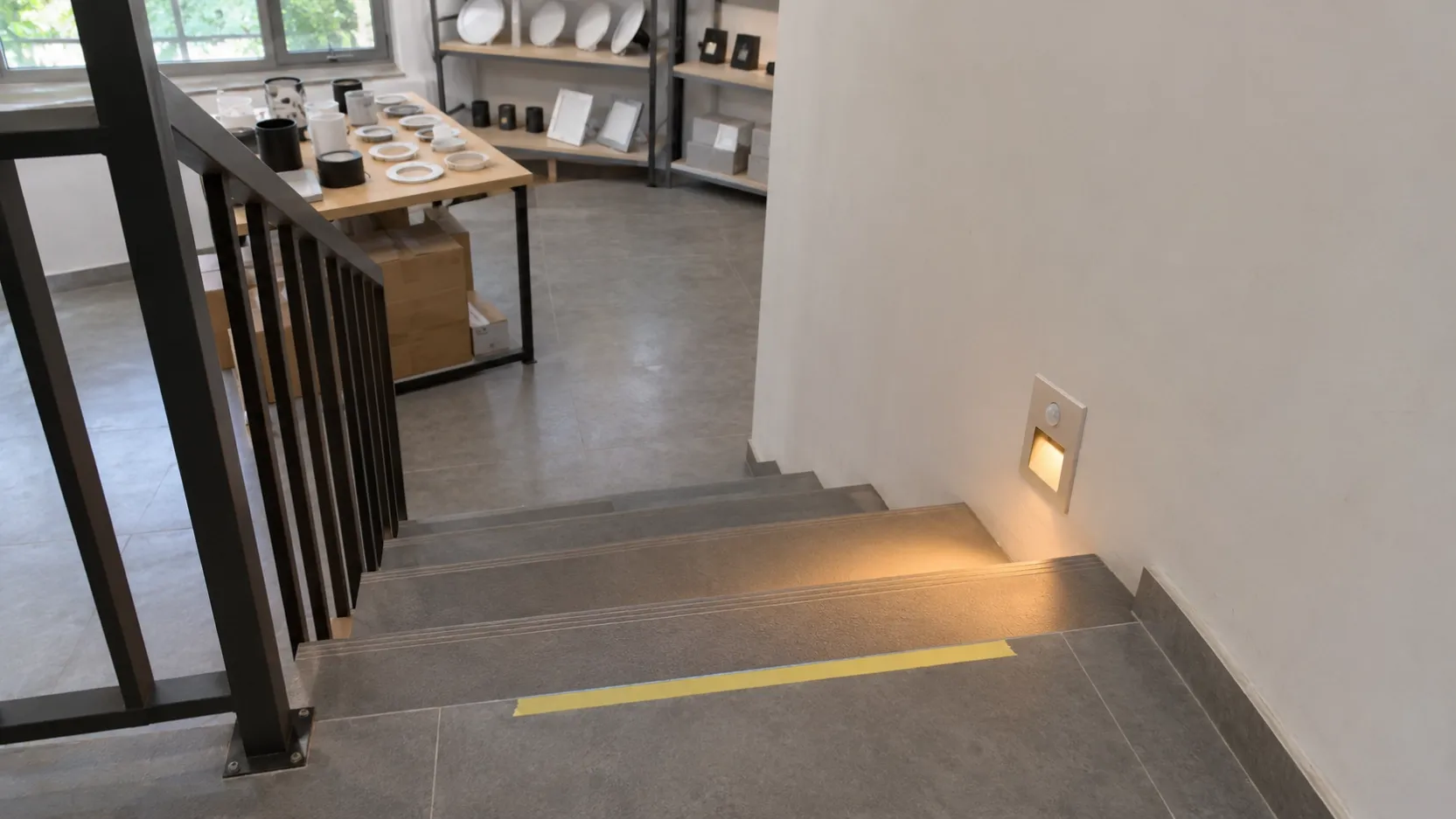
Should Hotel Staircase Step Lights Stay On or Switch On in Groups?
Compare scheduled, individual PIR, and grouped control for hotel staircase step lights. Mark which lights should switch on at each entrance before the first fix.
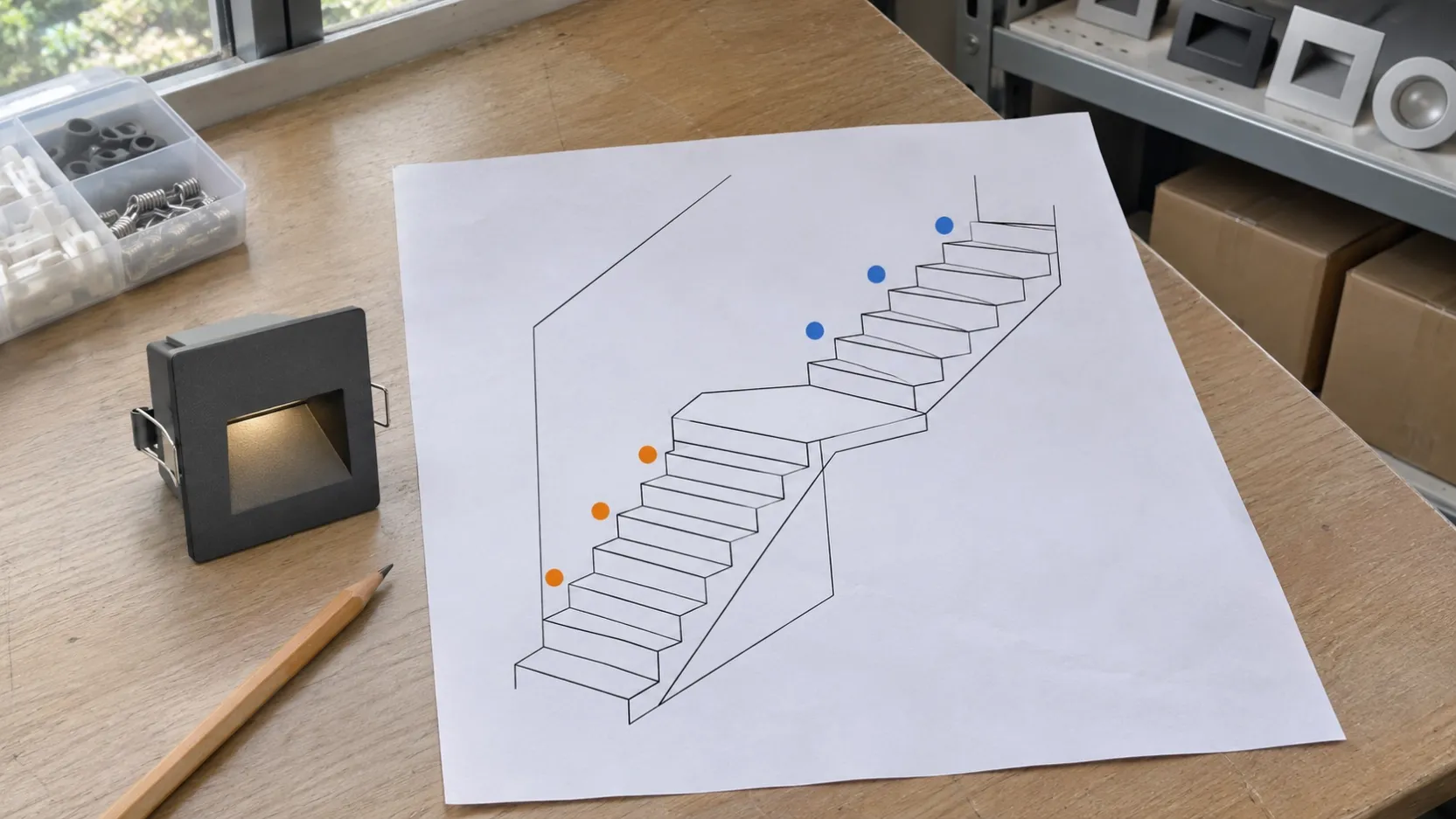
Before first fix, decide what a guest should see when entering the staircase. If the route needs continuous low-level guidance during certain hours, specify scheduled lighting. If only the area near each fitting needs to light, consider individual PIR control. If guests need to see the next flight before they step onto it, specify which fittings should switch on together and which approaches should trigger them. Make that decision on the stair plan before the electrician finalises the wiring.
When does it make sense to leave the step lights on?
If the hotel wants the same low-level guidance throughout its evening operating hours, scheduled operation is worth considering. Guests see the intended light as soon as they arrive, without waiting for an individual sensor to respond. Before choosing this approach, agree the operating hours and the output needed for guidance. Leaving a fitting on at its normal output is not the same as running it at a reduced level; if the project needs dimming, confirm that the fitting and control system support it.
When is individual PIR control enough?
Individual PIR control suits a layout where each fitting only needs to serve the immediate area. The key question is whether local activation gives guests enough visibility ahead. On a flight entered from the top, the first fitting might light the approach while the fittings farther down remain off. That may be acceptable if the general stair lighting already makes the route visible. If the brief calls for the next flight to be lit before the guest starts descending, individual activation may not deliver the intended effect.
Which step lights should switch on together?
Draw the group around the route guests need to see, not simply around the nearest fittings. Take a two-flight staircase with a half-landing. A guest turning on the landing may need to see the first treads of the next flight, while someone passing the adjacent corridor entrance may not need to trigger either flight. Mark those two situations separately. Writing “all stair lights to be linked” leaves the supplier and installer guessing where the group starts and ends.
DAYBREAK's quoted 15S and 16S linked options are described as switching on the connected fittings when one sensor triggers. That describes the intended group response, not the number of fittings you can connect or how the group should be wired. Request the wiring diagram for the quoted version, confirm the permitted group size and check which entry points can trigger it. Do not assume that a standard PIR fitting can be added to the group.
What should the buyer send before first fix?
A marked-up stair plan is more useful than a request for “motion-sensor step lights.” For each entrance, show which fittings must come on, which should stay unchanged, and what the group should do when the staircase is empty. An instruction such as “Upper landing: light the upper flight and half-landing before descent; adjacent corridor traffic must not trigger this group” gives the supplier something specific to review and the installer something specific to coordinate.
If the project calls for a dim background level that increases on approach, write that out as a separate requirement. Confirm the exact driver and control arrangement before ordering; basic on/off linkage does not establish that the fittings can dim or return to a standby level.
Send DAYBREAK your marked staircase plan with the number of fittings per group, project quantity and destination. Tell us what must happen at the top entrance, bottom entrance and any intermediate landing so we can confirm which options to quote and what still needs to be checked on a sample.
Frequently Asked Questions
Does one PIR sensor switch on every step light on the staircase?
Only if the specified control arrangement is designed and connected to do so. Confirm the exact linked configuration and which fittings belong to each group.
Can hotel step lights stay dim and brighten when someone approaches?
That requires a compatible dimming and control arrangement. Do not assume an on/off PIR fitting or a linked on/off group supports a standby level.
Can motion-controlled step lights replace emergency stair lighting?
Do not assume they can. Treat these fittings as supplementary guidance unless the responsible project designer has separately verified the required normal and emergency lighting arrangements.