What is the Difference Between Commercial and Residential LED Lighting?
Learn how to distinguish between professional-grade fixtures and home-use lights to ensure your project meets safety standards and long-term durability.
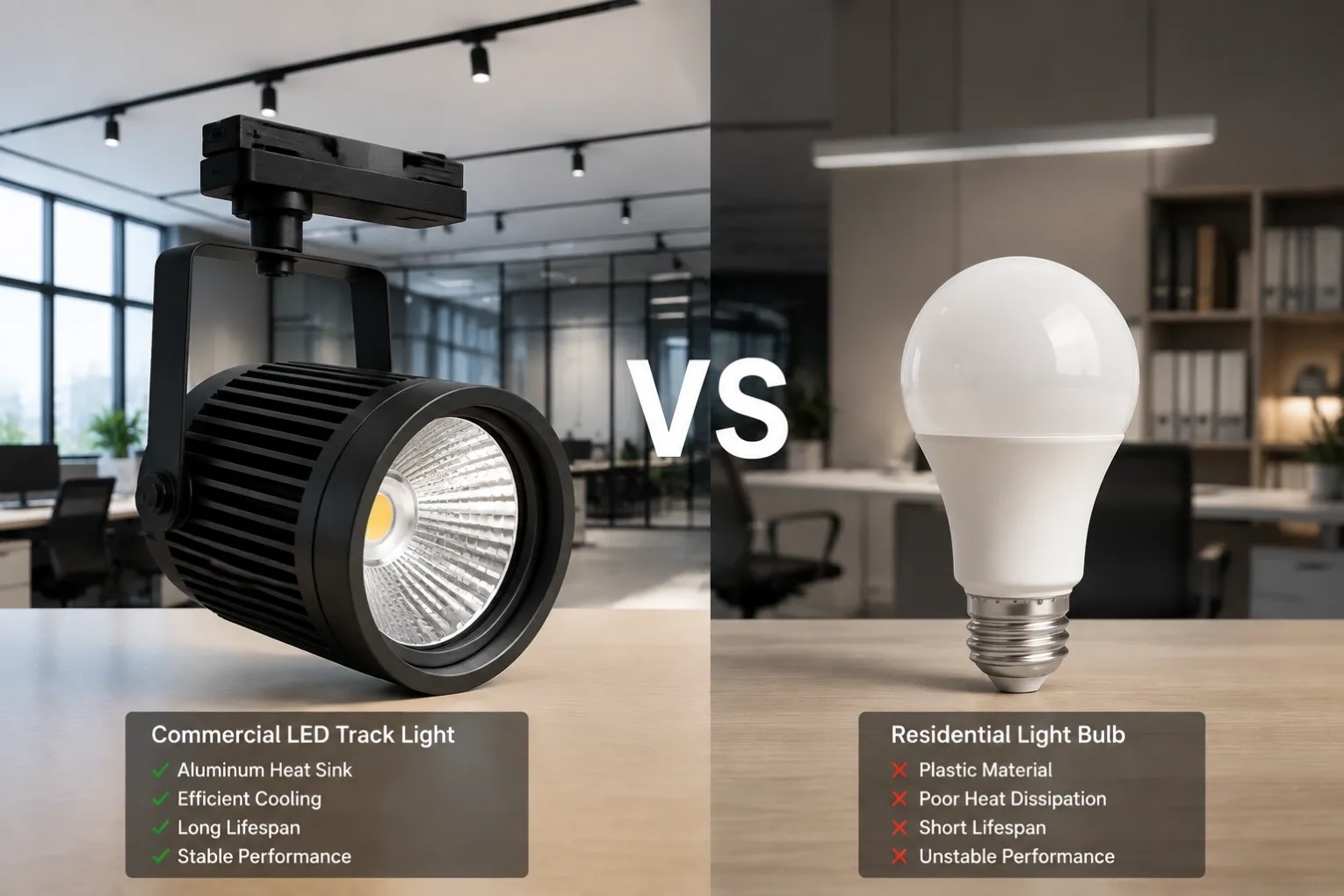
Many B2B buyers and project managers ask: "What is the real difference between a commercial LED light and a residential one?" At first glance, they might look similar, but for a professional project, choosing the wrong grade can lead to a maintenance nightmare.
In this guide, you will learn how to identify the key technical differences so you can protect your project’s ROI and ensure long-term performance.
1. Build Quality: Die-Cast Aluminum vs. Plastic
Residential lights are designed to be used for a few hours a day. They often use plastic or thin metal to save costs. However, commercial LED lighting is built for 10-14 hours of daily operation. At DAYBREAK OPTO-TECHNOLOGY, we use heavy-duty die-cast aluminum for our track lights and wall lights. This isn't just for looks—it’s for heat dissipation. Better cooling means the LED chip lasts longer and doesn't lose brightness over time.
2. Performance: CRI and Flicker-Free Drivers
In a home, a little flickering or average color rendering might go unnoticed. In a commercial space—like a retail store or a gallery—it’s a deal-breaker.
- CRI (Color Rendering Index): Commercial projects usually require CRI 90+ to make products and interiors look vibrant.
- Drivers: Professional lights use high-quality drivers that are "flicker-free." This prevents eye strain for employees and ensures the space feels premium.
3. Certifications and Safety Compliance
This is the biggest "hidden" difference. Residential lights often lack the rigorous testing required for commercial buildings. For any professional tender, you need CE, LVD, EMC, and RoHS certifications. These aren't just pieces of paper; they are proof that the lights won't cause electrical interference or fire hazards in a large-scale installation. All our products meet these international standards to ensure your project clears inspection smoothly.
4. Warranty and Support
If a light fails in a house, it’s an inconvenience. If it fails in a hotel or a shopping mall, it’s a liability. Residential lights usually offer a 1-year limited warranty. Because we believe in our engineering, we provide a 3-year warranty on our commercial-grade fixtures. We support our B2B partners with technical data and IES files to ensure the lighting design is perfect before the first light is even installed.
Which One Does Your Project Need?
If you are managing a commercial renovation, a new office build, or a retail rollout, you cannot afford to use residential-grade products. The "savings" you get today will be lost in maintenance costs tomorrow.
Contact our technical team today to discuss your project requirements. We can help you select the right professional-grade LED solutions that fit your budget and your performance needs.
Frequently Asked Questions (FAQ)
Q: Can I use residential LED lights in a small office?
A: It is not recommended. Commercial spaces have different fire safety codes and usage hours. Using residential lights often voids the warranty and may fail to meet building safety inspections.
Q: Why is commercial lighting more expensive?
A: You are paying for better thermal management, higher-quality components (like drivers and chips), and rigorous safety certifications. This investment pays for itself by reducing energy bills and elimination of maintenance costs.
Q: Do you provide customization for commercial orders?
A: Yes. Unlike residential "off-the-shelf" products, we can customize wattages, beam angles, and color temperatures to meet the specific needs of your architectural project.