When Should LED Lighting Orders Use Wooden-Frame Export Packaging?
Learn when wooden-frame packaging is suitable for LED lighting orders and what buyers should confirm to reduce carton damage during international transport.
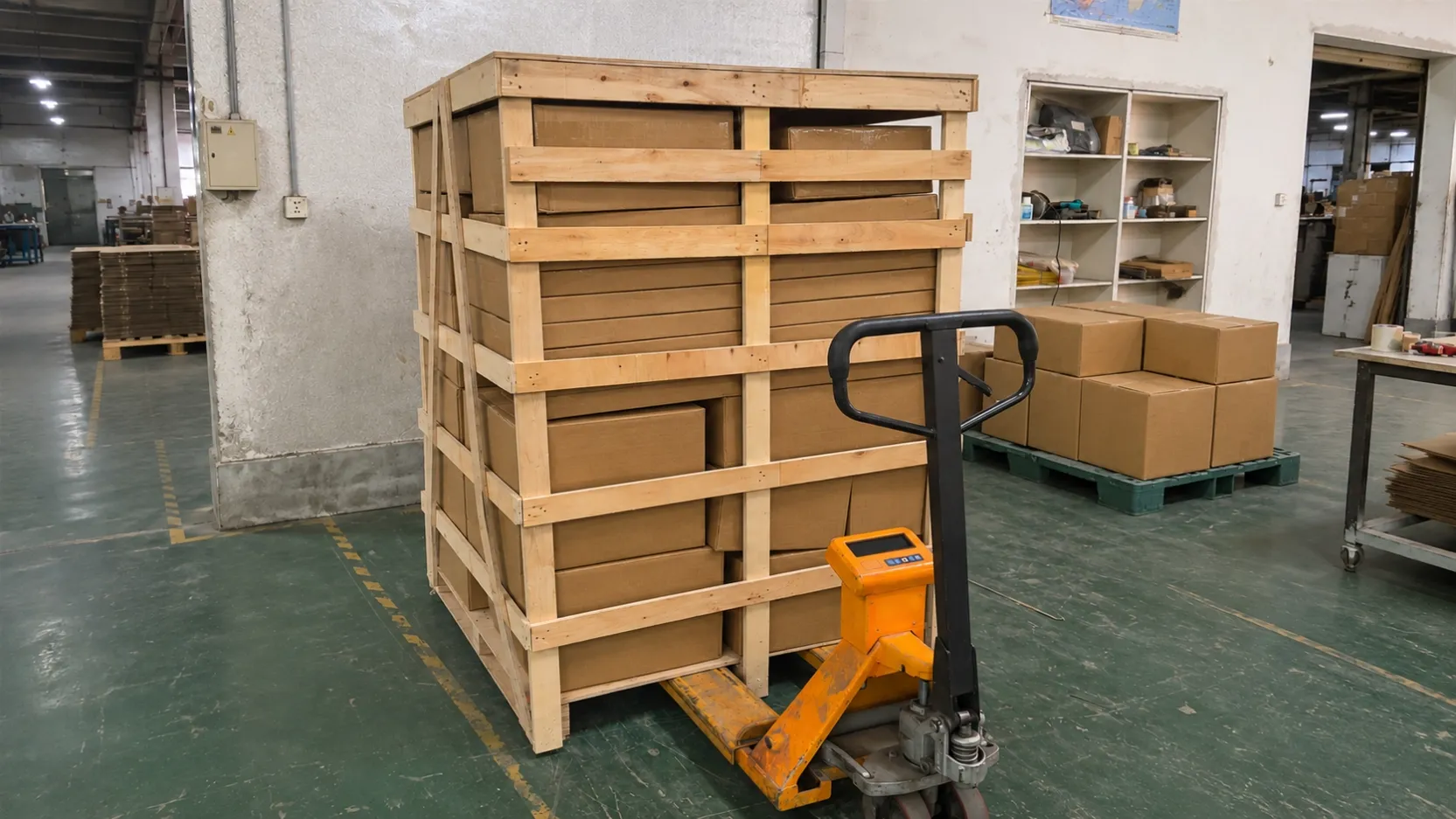
A reliable export packaging specification must protect both the LED fixture and the box in which it will be delivered or resold. B2B buyers should not rely on the instruction “pack securely.” Before production, confirm the individual protection, inner support, master-carton construction, reinforcement method, spare-box quantity and packing evidence required for each type of luminaire.
The correct solution depends on the fixture’s size, weight, surface finish, fragile components, sales packaging and transport route. A panel light, architectural wall light and outdoor bollard should not automatically use the same packaging structure.
Why can product boxes be damaged inside an undamaged outer carton?
An outer carton may survive a journey while the individual boxes inside are crushed, torn or rubbed. This normally happens when there is empty space inside the carton, insufficient internal support or too much load transferred from the cartons stacked above.
Adding another outer carton does not solve every problem. The supplier must also prevent movement and pressure inside the package. For a repeat order, buyers should share photos of previous damage and identify whether the problem affected the fixture, the individual box or both.
What protection should be confirmed for different LED fixtures?
| Fixture type | Main transport risk | Packaging points to confirm |
|---|---|---|
| Wall and step lights | Scratched finishes, damaged glass or faceplates | Surface protection, separated accessories and fitted foam support |
| Downlights and track lights | Crushed boxes, bent trims or contact between adaptors and housings | Individual boxes, fixed internal position and carton dividers |
| LED panel lights | Bent frames, damaged corners and pressure on the diffuser | Corner guards, full-face support and controlled stacking |
| Bollard and garden lights | Bent housings, damaged bases and surface impact | Body positioning, end protection and reinforced long cartons |
When are reinforced cartons sufficient?
Reinforced cartons may be suitable when the products are compact, adequately supported and shipped on a route with controlled handling. Buyers should confirm the carton quantity, gross weight, internal arrangement and whether empty spaces are filled.
Carton reinforcement should complement the internal packaging. Strong outer walls cannot protect a loose fixture or an unsupported retail box.
When should buyers request a wooden crate?
A wooden crate may be considered when cartons require additional protection against compression, repeated handling or mixed cargo. It can also be useful when a previous shipment experienced serious carton damage.
A crate does not replace individual protection. Each luminaire must still be held securely inside its own box, and the cartons must be fixed inside the crate so that they cannot shift during transport. The final choice should reflect the products, shipment size, route and freight method.
Why may a distributor need spare individual boxes?
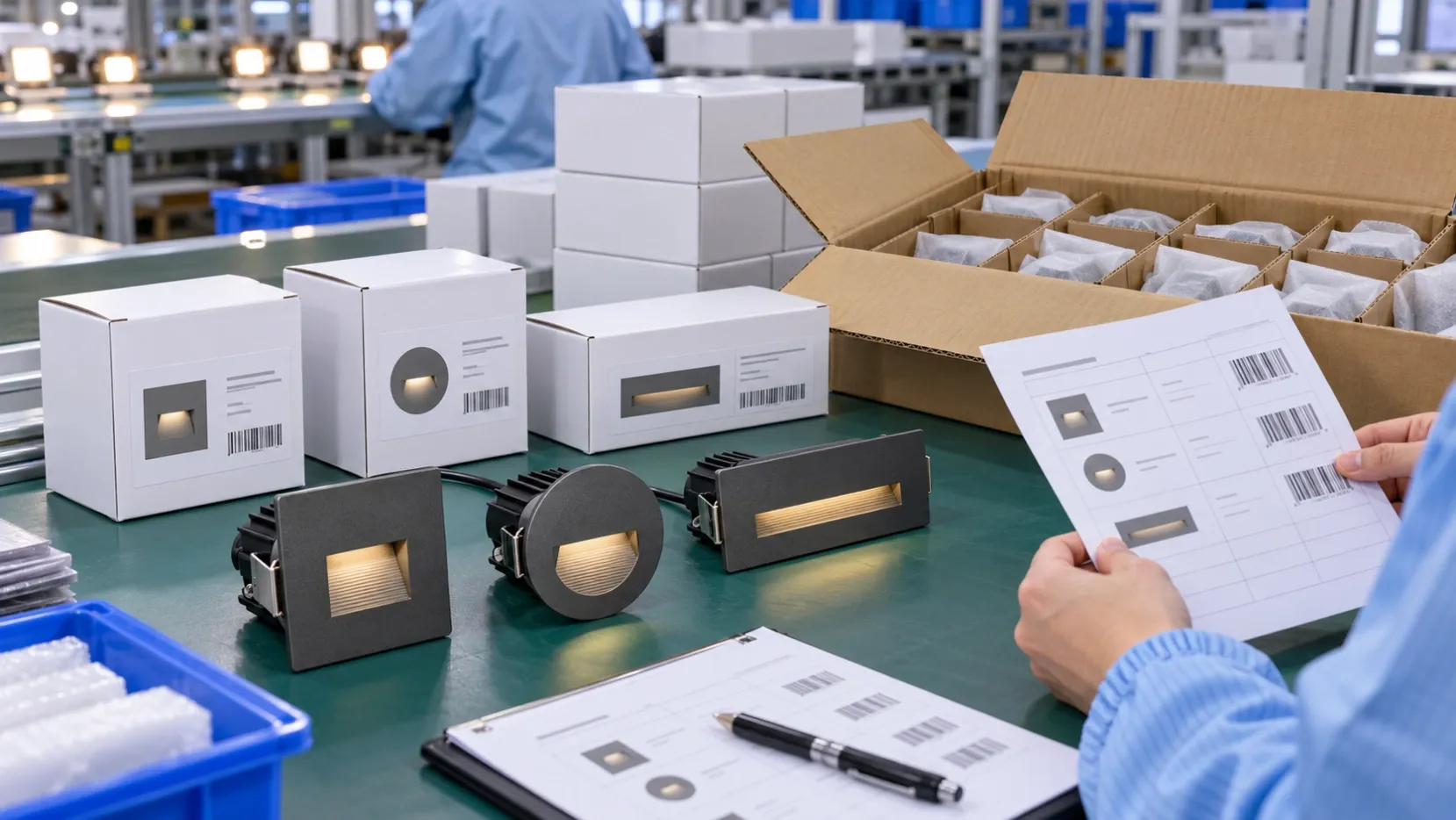
A working luminaire can become difficult to resell if its individual box arrives torn or crushed. Spare boxes allow distributors to replace damaged packaging without discarding or discounting an undamaged product.
The required quantity should be agreed before production. Buyers should confirm whether the spare boxes must include labels, barcodes, product images or item numbers. Empty boxes should be packed flat or otherwise protected so that they do not arrive damaged themselves.
What packaging requirements should be written into the order?
Important requirements should appear in the PI, purchase order or approved packing instruction. A practical confirmation should include:
- Individual protection required for each fixture
- Foam, dividers, corner guards or other internal support
- Quantity and arrangement per master carton
- Maximum acceptable carton weight where applicable
- Reinforced-carton or wooden-crate requirement
- Number and specification of spare product boxes
- Shipping marks and product-label requirements
- Photos required before the shipment is released
What evidence should buyers request before shipment?
Photos should show more than closed cartons. Request images of the fixture inside its individual protection, the arrangement inside the master carton, the sealed carton, labels and any completed wooden crate.
For repeat orders following a packaging complaint, compare the new packing method with the previous problem. This makes it easier to verify that the agreed correction has actually been applied.
FAQ: Export Packaging for LED Lighting Orders
Does double boxing prevent all transport damage?
No. Double boxing can improve external protection, but internal movement, unsupported corners and excessive stacking pressure can still damage products or individual boxes.
Should every LED lighting shipment use a wooden crate?
No. The decision depends on the fixture structure, shipment quantity, packaging design, freight method and handling risk. Reinforced cartons may be sufficient for some orders.
Can different LED fixture types share one packaging specification?
The order can follow one general packaging standard, but product-level protection should be reviewed separately. A panel light and a bollard light have different structural risks.
How many spare product boxes should a distributor request?
There is no universal quantity. Consider the order size, past damage history, retail-box importance and local replacement needs, then confirm the amount before production.
What should buyers send when requesting a packaging proposal?
Send the fixture list, quantities, destination, transport method, sales-box requirements and any photos of previous damage. This allows the supplier to review the packaging by product instead of offering a generic solution.
Confirm packaging before production
Packaging requirements are easier to correct before mass production than after the shipment arrives. Send DAYBREAK your fixture list, quantities, destination and packaging concerns for a product-specific review. You can also view our LED lighting products or submit your order requirements for packaging and shipment confirmation.
Wooden-frame packaging is worth considering when an LED lighting shipment needs more protection against carton compression, tearing and repeated handling. It is particularly relevant when a previous shipment arrived with damaged outer cartons or individual product boxes. Buyers should confirm the wooden-frame structure, carton arrangement, spare-box requirement and packing photos before shipment.
The wooden frame shown here was prepared for a repeat LED lighting order after the buyer reported packaging damage on an earlier shipment. The lights remained packed in their normal individual boxes and outer cartons, while the completed cartons were secured inside an external wooden frame.
What problem does a wooden frame solve?
A wooden frame creates a rigid outer structure around the packed cartons. It helps reduce direct pressure on the cartons and provides additional protection during loading, unloading and international transport.
This is different from simply adding another cardboard carton. The wooden structure helps the shipment maintain its overall shape when it is moved or when other cargo is placed nearby.
When should buyers consider wooden-frame packaging?
Wooden-frame packaging may be suitable in the following situations:
- A previous shipment arrived with torn or compressed cartons.
- The order contains many cartons that must remain together during transport.
- The individual product boxes are important for resale or local delivery.
- The shipment will pass through several handling or transfer points.
- The buyer specifically requires additional external reinforcement.
It is not automatically necessary for every order. The decision should consider the product type, total quantity, carton dimensions, shipment weight, freight method and previous delivery experience.
Does a wooden frame protect the individual product boxes?
The frame mainly protects the shipment from external pressure and handling damage. The individual lights must still be packed correctly in their product boxes, and those boxes must be arranged securely inside the outer cartons.
Buyers should therefore confirm both levels of packaging:
| Packaging level | Purpose | What to confirm |
|---|---|---|
| Individual product box | Protects each luminaire and keeps its accessories together | Correct product, accessories, label and box condition |
| Outer carton | Groups and protects multiple product boxes | Quantity, carton condition, sealing and shipping marks |
| Wooden frame | Adds external structural protection | Carton arrangement, frame stability and handling access |
Why may a distributor request spare product boxes?
A luminaire may remain undamaged even when its individual box is torn or crushed. For wholesalers and distributors, damaged packaging can make a saleable product difficult to deliver to the next customer.
Spare empty boxes allow the buyer to replace damaged packaging locally. The required quantity should be confirmed before production, together with any labels, barcodes or item-number requirements.
In the repeat-order case behind this article, the buyer requested replacement boxes because boxes from an earlier shipment had been damaged. The new order therefore included additional empty boxes as well as external wooden-frame protection.
What should buyers confirm before approving the packing method?
The purchase order or PI should clearly record:
- Whether wooden-frame reinforcement is required
- Which cartons will be placed inside the frame
- Total carton quantity and shipment weight
- Number of spare individual boxes required
- Label requirements for the spare boxes
- Freight method and delivery destination
- Photos required before shipment
Clear written confirmation is more useful than a general instruction such as “pack the goods securely.” It gives the supplier a specific packing requirement to follow and gives the buyer something practical to check.
What packing photos should buyers request?
Before shipment, buyers can request photos showing:
- The sealed outer cartons before the wooden frame is built
- The arrangement of cartons inside the frame
- The completed wooden frame from several sides
- The shipping marks and carton labels
- The included spare boxes
- The final shipment weight where required
For a repeat order following previous carton damage, these photos help confirm that the agreed corrective packing method has been applied.
FAQ: Wooden-Frame Packaging for LED Lighting
Is a wooden frame required for every LED lighting order?
No. It should be selected according to the order size, carton condition requirements, transport route and handling risk.
Is wooden-frame packaging limited to downlights?
No. It can be considered for different LED lighting orders, including wall lights, step lights, panel lights, track lights, downlights and outdoor fixtures.
Is a wooden frame the same as double boxing?
No. Double boxing adds another cardboard layer. A wooden frame provides a rigid external structure around the packed cartons.
Can spare empty boxes be included with an order?
They can be included when agreed before production. Buyers should confirm the quantity, box type and any required labels.
What information is needed for a packaging proposal?
Send the product list, quantities, carton requirements, destination, freight method and photos of any previous packaging damage. The supplier can then review whether standard cartons or additional wooden-frame protection is appropriate.
Confirm the packing method before production
Packaging requirements should be agreed before the order enters production. Send DAYBREAK your LED lighting product list, quantities, destination and any previous damage photos for a packaging review. For a quotation or packing confirmation, contact our project team.