Clear or Frosted Cover for Recessed COB Spotlights: Which Fits Commercial Projects?
Clear and frosted covers change how a recessed COB spotlight looks in use. Compare them before approving samples or bulk specifications.
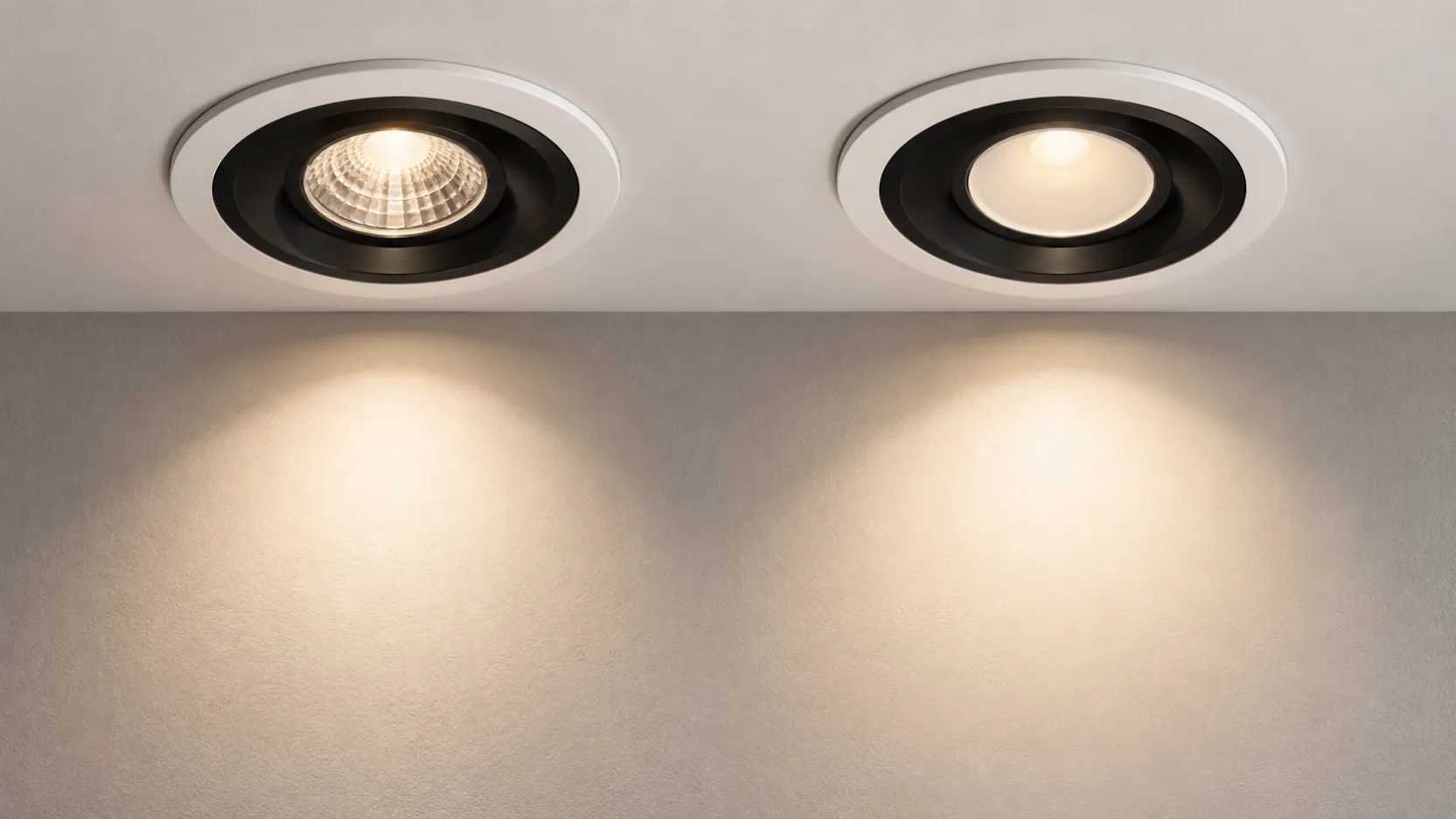
A buyer recently asked to see the frosted cover before approving a recessed COB spotlight order. That was the right step. Clear and frosted covers can change the appearance of the light source, so the choice should be confirmed with an actual sample—not left as an unclear line on the quotation.
Which cover should a buyer choose?
When does a clear cover make sense?
Choose it when the visible optical detail and the original beam appearance are acceptable for the project. Check the switched-on sample at the intended viewing angle before approval.
When is a frosted cover worth considering?
A frosted cover gives the light aperture a softer appearance and makes the internal LED less visible. It may also affect the delivered light, so do not assume that two covers perform identically without comparing samples or photometric data.
What should be confirmed before a bulk order?
Compare both covers using the same wattage, CCT, beam angle and housing. Photograph the samples switched on and off, then record the approved cover in the specification, PI and production sample. This prevents the wrong version from reaching production.
Frequently Asked Questions
Does a frosted cover change the beam angle?
It can change the beam appearance. Request model-specific data when the beam is critical.
Is a frosted cover always better for glare control?
No. Visual comfort depends on the complete optical design, installation and viewing angle.
Can clear and frosted covers be mixed in one project?
They can, but each area should have an approved specification to avoid an inconsistent ceiling appearance.
Review our 60° recessed COB downlight, or send us your wattage, beam angle, cover preference and quantity for sample and specification review.