How Can Buyers Reduce Water-Ingress Risk in Outdoor LED Wall Light Projects?
Learn what affects water-ingress risk in outdoor LED wall light projects. Send your wall, cable entry, and installation details for a product review.
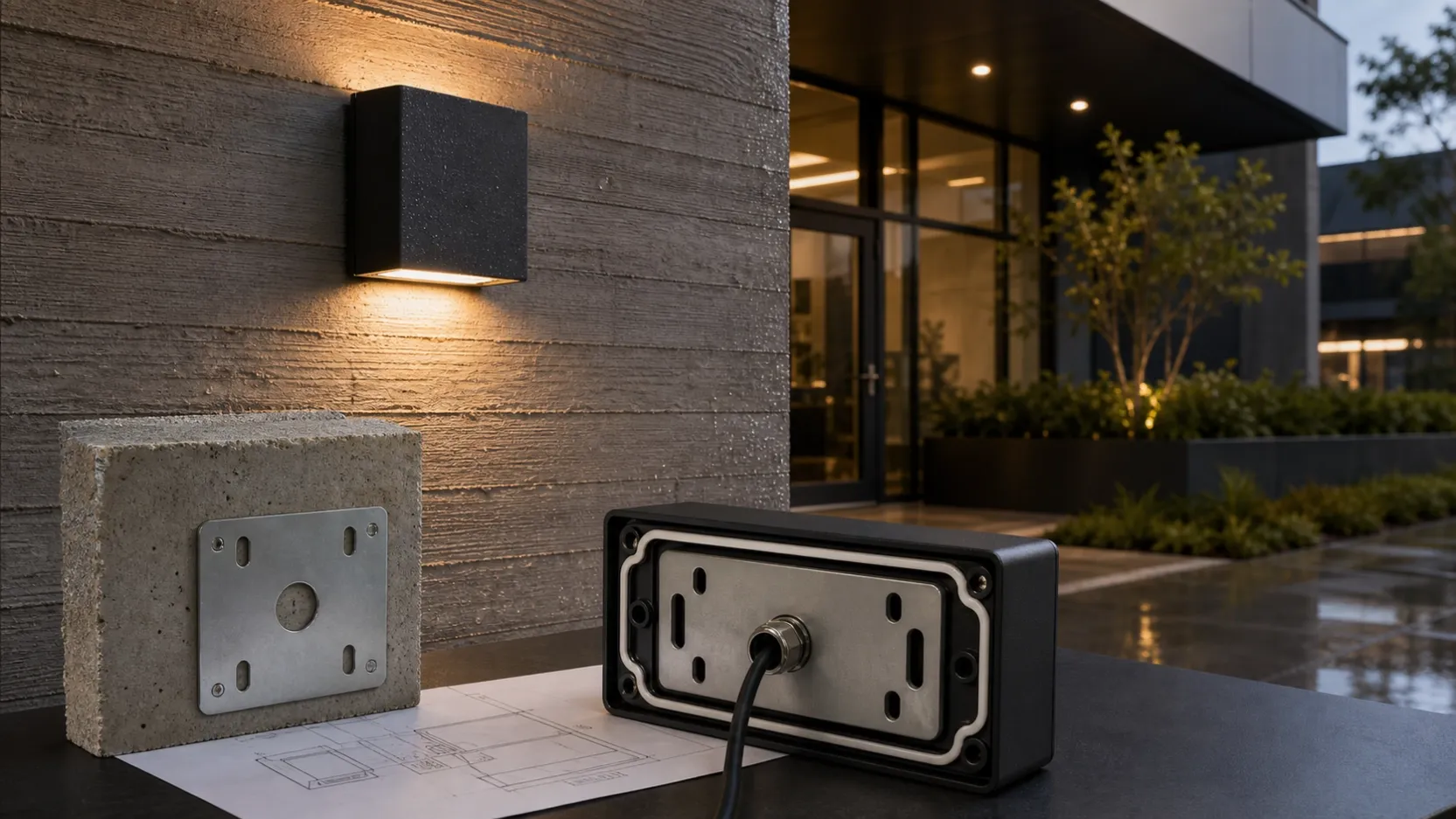
To reduce water-ingress risk in an outdoor LED wall light project, buyers should check more than the IP rating. The fixture, rear gasket, cable entry, wall surface and installation method must work together. Before ordering, send the supplier clear information about the mounting location and exposure conditions.
Why is the IP rating not the whole answer?
An IP rating applies to the tested enclosure and stated conditions. It does not confirm that every cable connection, wall opening or installation surface will be sealed correctly on site. Product specifications must also be checked for the exact model and configuration being ordered.
What should buyers ask the supplier?
Request a rear-view photo or drawing showing the mounting plate, gasket and cable-entry position. Confirm whether the intended cable and connection method match the fixture instructions. These details are especially important when replacing an existing wall light.
Where can installation risk appear?
The interface between the fixture and wall deserves attention. An uneven surface may prevent the rear gasket from sitting correctly. The cable entry also needs the correct cable shape, diameter and sealing method. Installation should follow the product instructions and local electrical requirements.
Which project details should buyers provide?
| Project information | Why it matters |
|---|---|
| Wall material and surface photo | Mounting and gasket contact |
| Covered or exposed location | Environmental exposure |
| Cable-entry direction | Connection review |
| Voltage, quantity and finish | Product configuration |
What should be checked on a sample?
Inspect the rear gasket, mounting hardware, cable entry and installation instructions. Fit the sample to a representative wall section where practical. Do not drill extra openings or change seals without written guidance, as modifications may affect the enclosure.
How can DAYBREAK help with selection?
Browse our architectural LED lighting products, then send the wall type, installation photo, exposure conditions, voltage and required quantity. We will identify the product and installation details that still need confirmation before quotation.
Frequently Asked Questions
Does a higher IP rating correct an unsuitable installation?
No. The selected rating, fixture structure and installation method must all suit the actual project conditions.
Can outdoor wall lights be installed on uneven stone walls?
Installation may require a suitable flat mounting interface. Review the wall condition and fixture instructions before proceeding.
Do all outdoor LED wall lights use the same cable-entry design?
No. Cable-entry location and sealing structure vary by model. Check the exact product drawing before ordering.
To reduce water-ingress risk in an outdoor LED wall light project, buyers should check more than the IP rating. The fixture, rear gasket, cable entry, wall surface and installation method must work together. Before ordering, send the supplier clear information about the mounting location and exposure conditions.
Why is the IP rating not the whole answer?
An IP rating applies to the tested enclosure and stated conditions. It does not confirm that every cable connection, wall opening or installation surface will be sealed correctly on site. Product specifications must also be checked for the exact model and configuration being ordered.
What should buyers ask the supplier?
Request a rear-view photo or drawing showing the mounting plate, gasket and cable-entry position. Confirm whether the intended cable and connection method match the fixture instructions. These details are especially important when replacing an existing wall light.
Where can installation risk appear?
The interface between the fixture and wall deserves attention. An uneven surface may prevent the rear gasket from sitting correctly. The cable entry also needs the correct cable shape, diameter and sealing method. Installation should follow the product instructions and local electrical requirements.
Which project details should buyers provide?
| Project information | Why it matters |
|---|---|
| Wall material and surface photo | Mounting and gasket contact |
| Covered or exposed location | Environmental exposure |
| Cable-entry direction | Connection review |
| Voltage, quantity and finish | Product configuration |
What should be checked on a sample?
Inspect the rear gasket, mounting hardware, cable entry and installation instructions. Fit the sample to a representative wall section where practical. Do not drill extra openings or change seals without written guidance, as modifications may affect the enclosure.
How can DAYBREAK help with outdoor wall light selection?
Browse our outdoor LED wall light range, then send the wall type, installation photo, exposure conditions, voltage and required quantity. We will identify the product and installation details that still need confirmation before quotation.
Frequently Asked Questions
Does a higher IP rating correct an unsuitable installation?
No. The selected rating, fixture structure and installation method must all suit the actual project conditions.
Can outdoor wall lights be installed on uneven stone walls?
Installation may require a suitable flat mounting interface. Review the wall condition and fixture instructions before proceeding.
Do all outdoor LED wall lights use the same cable-entry design?
No. Cable-entry location and sealing structure vary by model. Check the exact product drawing before ordering.
Should buyers approve an outdoor wall light sample before a bulk order?
Yes, where practical. Check the finish, mounting structure, cable entry and installation requirements against the actual project conditions.
Ready to Review Your Outdoor Wall Light Project?
Visit our outdoor LED wall light collection and send us your installation photo, wall material, voltage, required quantity and target finish. These details help us review suitable options without making assumptions about the site.