When Should Hotel Projects Use PIR Sensor Wall Lights at Entrances and Corridors?
Use PIR wall lights in low-traffic hotel areas where automatic switching is useful. Confirm controls, mounting position and site conditions before ordering.
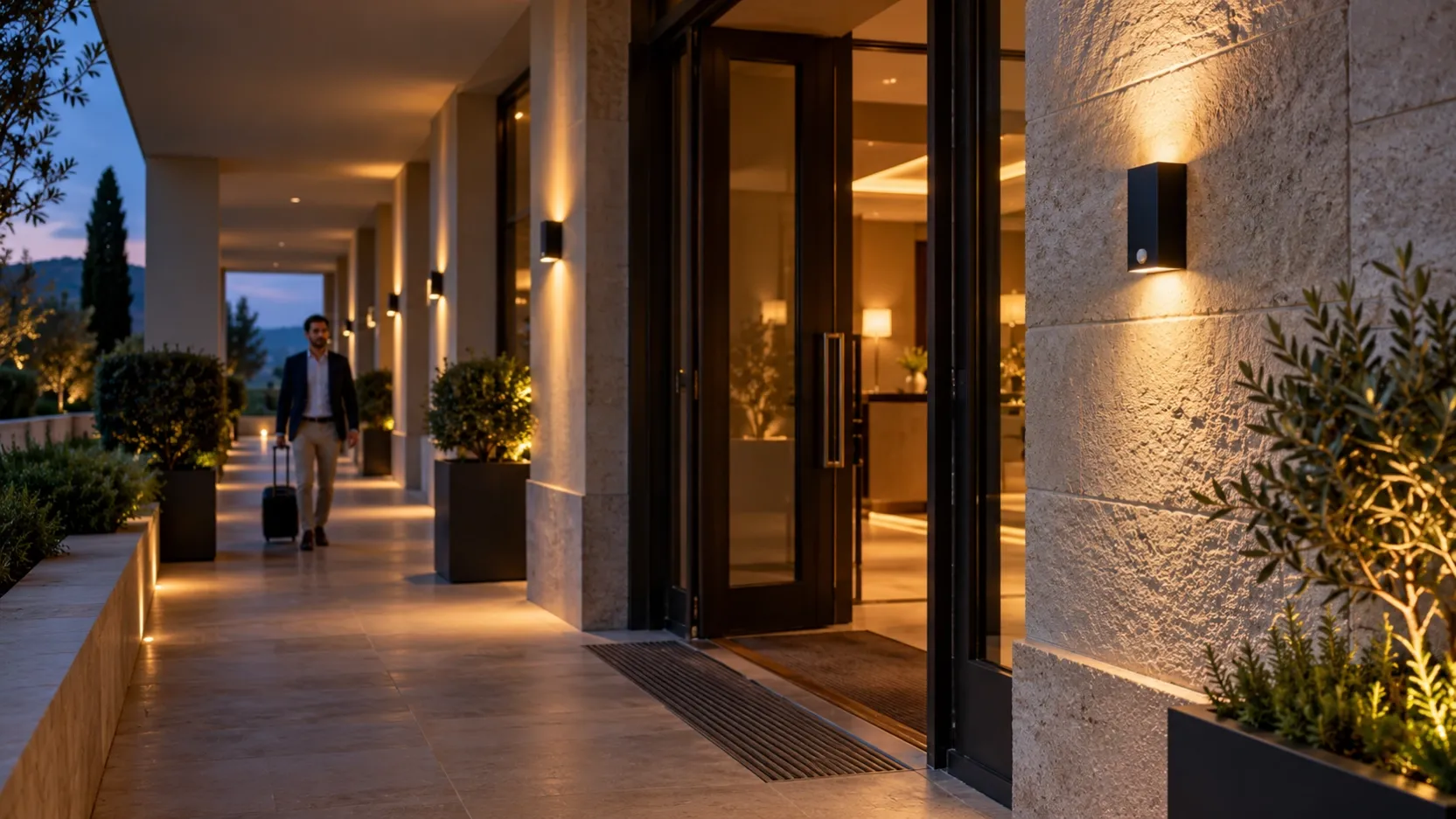
PIR sensor wall lights are suitable for hotel entrances, exterior corridors and service routes where traffic is intermittent and automatic local switching is useful. They should not be selected simply because they include a sensor. Before ordering, confirm the traffic pattern, mounting position, detection direction, control logic and whether the area must remain continuously illuminated.
For main entrances, reception approaches and required emergency routes, continuous or centrally controlled lighting may be more appropriate. PIR control works best when the project team has clearly defined when the light should switch on, how long it should remain on and what happens when nobody is detected.
Which hotel areas are suitable for PIR sensor wall lights?
| Hotel area | Is PIR control suitable? | What should be checked? |
|---|---|---|
| Secondary entrance | Often suitable when use is intermittent | Approach direction, mounting position and the required operating hours |
| Exterior guest corridor | Suitable when automatic local lighting is accepted | Detection gaps, fixture spacing and possible false triggering |
| Service entrance | Often suitable for staff access outside busy periods | Door movement, delivery traffic and manual override requirements |
| Main hotel entrance | Not always suitable as the only control method | Whether the entrance must remain continuously illuminated |
| Emergency or required egress route | Must follow the approved project design and local requirements | Emergency-lighting function cannot be assumed from a PIR sensor |
What sensor details should buyers confirm before ordering?
Does the sensor detect people approaching from the correct direction?
The detection area shown in a product datasheet may not match the real installation. A sensor mounted beside a door can respond differently from one facing along a corridor. Ask the supplier for the recommended mounting direction and test a sample at the intended height before approving the order.
What controls the switching time and daylight response?
Detection distance, delay time and daylight settings are model-specific. Do not assume that every PIR wall light offers adjustable settings. Request the sensor specification and confirm whether the values are fixed, adjustable or available as a customised option.
Can the light remain on when the hotel needs continuous illumination?
Some projects require a manual override or connection to a central lighting control system. Confirm this before placing the order. A standard sensor model may not support the control method required by the electrical consultant.
When should a hotel avoid PIR-only wall lighting?
PIR-only operation is usually not the right choice when an entrance must look continuously open, when CCTV visibility depends on stable illumination, or when the approved lighting plan requires the fittings to remain on throughout the night.
It may also be unsuitable where moving plants, passing vehicles or nearby doors could cause unwanted activation. In these locations, continuous low-level lighting or central time control may provide more predictable operation.
How should buyers test a PIR wall light sample?
Install the sample in a position that matches the planned project as closely as possible. A desk test cannot show how the sensor will respond in a real corridor or entrance.
- Use the proposed mounting height and wall position.
- Approach the sensor from the front and from both sides.
- Check for blind spots close to doors and corridor corners.
- Observe whether doors, vehicles or landscaping cause unwanted switching.
- Confirm the switch-off delay and retrigger behaviour.
- Review the beam effect and glare from normal guest viewpoints.
- Record the approved model, finish and sensor settings before production.
Which product information should be included in the enquiry?
A useful enquiry should include the hotel area, wall material, mounting height, approach direction, supply voltage, required colour temperature, housing colour and estimated quantity. The buyer should also state whether the light may switch off completely or must remain on at a lower or continuous level.
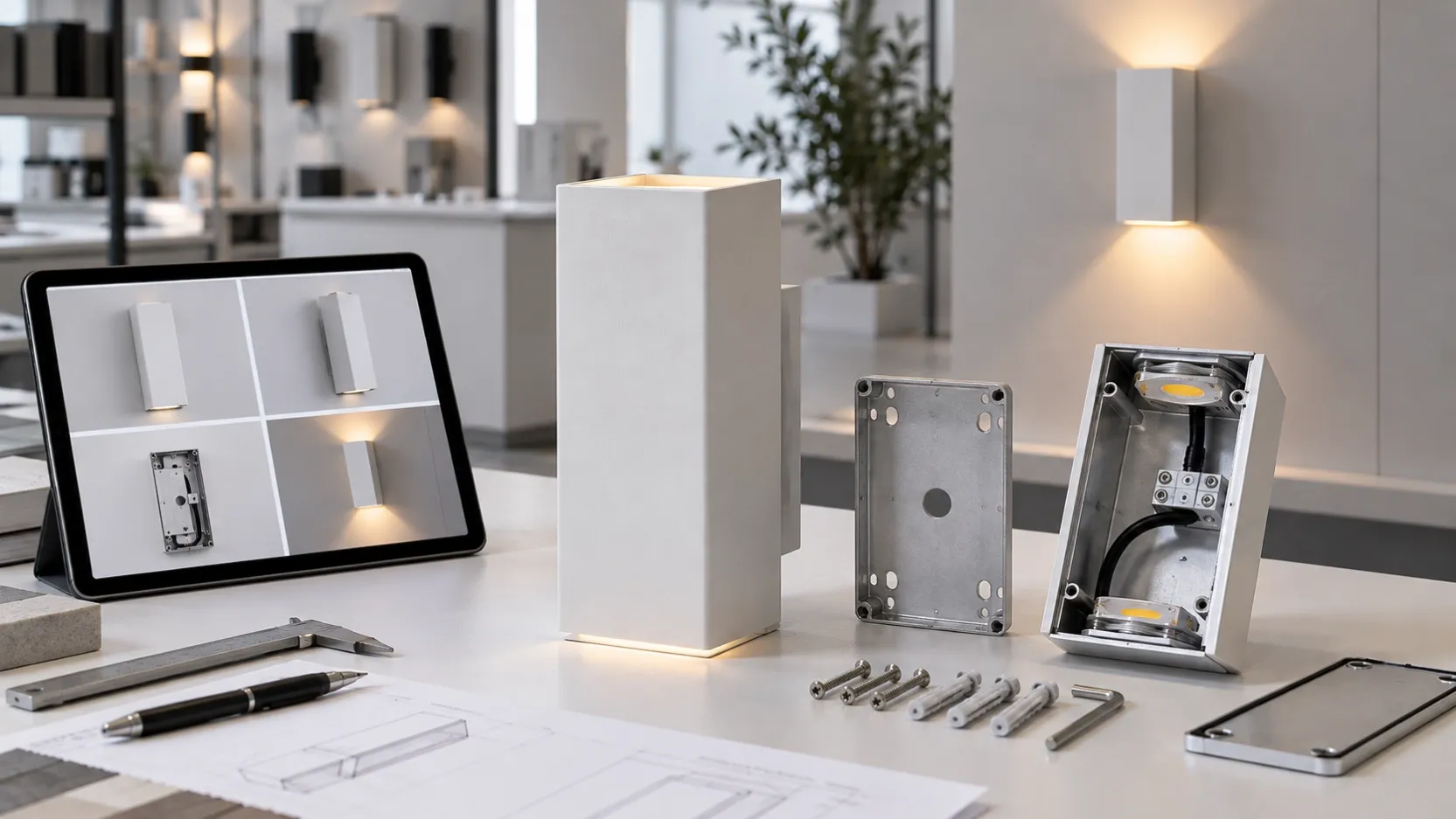
DAYBREAK offers a 6W/12W IP65 PIR sensor up-and-down wall light in black or white for entrances, corridors and exterior walls. Sensor behaviour and control requirements should still be confirmed against the actual project before ordering.
You can also review the full LED wall light range if the project requires non-sensor models, different beam effects or other housing designs.
Frequently Asked Questions
Can PIR wall lights be used at a hotel’s main entrance?
Yes, but they may not be suitable as the only source of light. If the entrance must remain continuously illuminated for visibility, security or presentation, use an appropriate continuous or centrally controlled lighting plan.
Does an IP65 rating confirm that the PIR sensor suits every outdoor location?
No. IP65 describes protection against dust and water ingress under defined test conditions. The installation method, cable entry, drainage, exposure and maintenance conditions still need to be reviewed.
Can the PIR detection distance and delay time be customised?
This depends on the sensor and production configuration. Send the required detection direction, delay logic and project quantity to the supplier for confirmation instead of assuming these settings are adjustable.
Should a buyer approve a sample before a bulk order?
Yes. Test the sample at the intended mounting height and location. Confirm detection, switching behaviour, beam effect, finish and installation details before approving mass production.
What should I send for a model recommendation?
Send the entrance or corridor drawing, mounting height, wall position, approach direction, voltage, colour temperature, finish, control requirement and quantity. These details allow the supplier to check whether a PIR model or a standard wall light is the better option.
Next Step
Send your hotel entrance or corridor layout, mounting height and required operating logic. DAYBREAK can review the application, recommend suitable wall light options and prepare a sample specification for project approval.