What Should Buyers Check in Real LED Wall Light Photos Before Ordering Samples?
Before ordering LED wall light samples, check the front, rear, mounting plate, cable entry and actual beam photos. Send your models for a focused review.
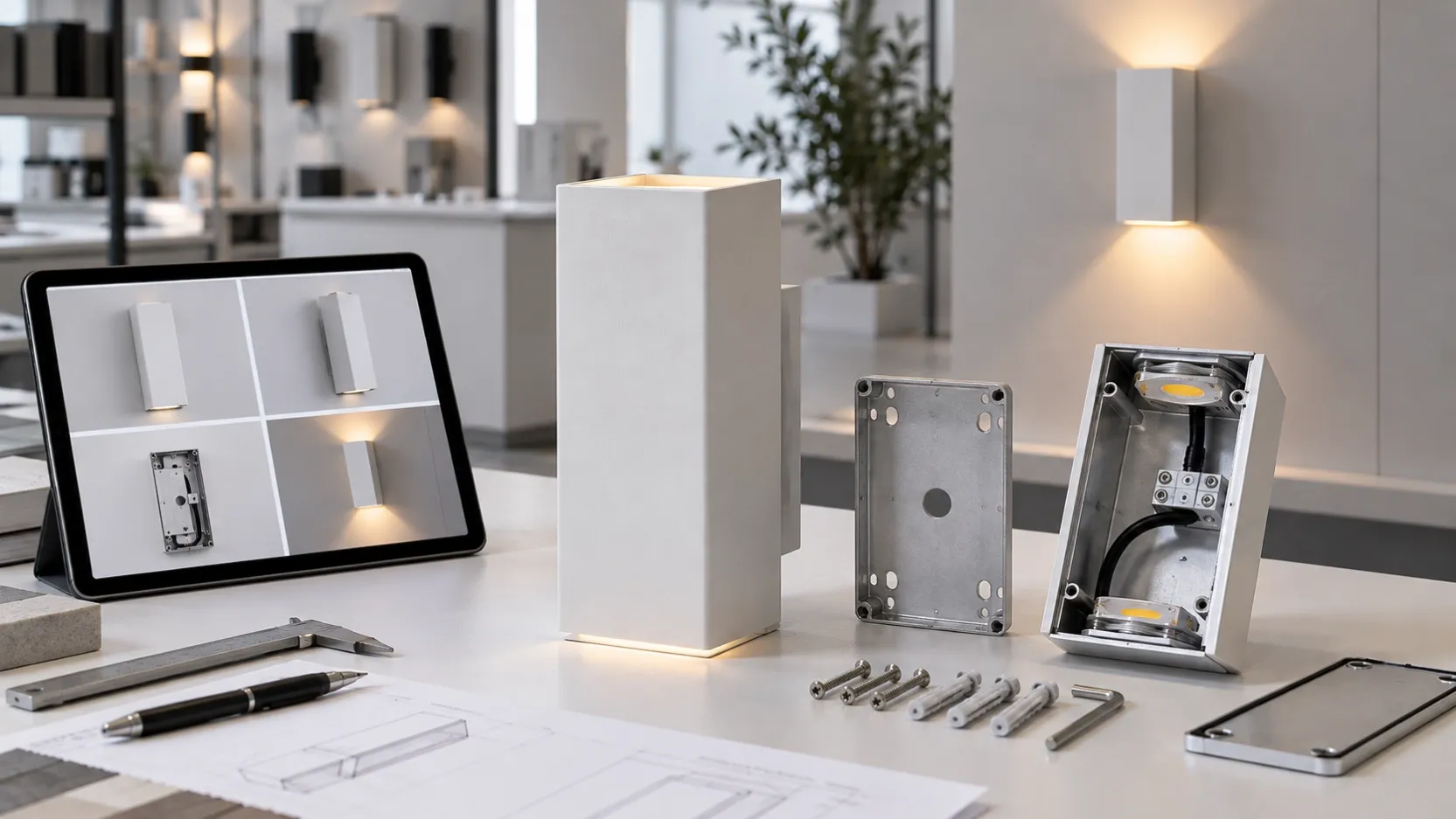
A product photo shows appearance; it cannot confirm fit, function, beam distribution or sealing. Real photos are useful for what a datasheet hides — finish, mounting plate detail and how the fixture is built — but they never replace a sample. Knowing which facts a photo can establish stops buyers approving on appearance alone.
Key facts about product photos
- Photos confirm appearance — finish, proportions, plate detail.
- Photos cannot confirm fit — cut-out, depth, fixing centres.
- Photos cannot confirm function — driver, dimming, flicker.
- Photos cannot confirm sealing — gasket compression, gland type.
- Rear photos matter most — they show how the fixture is built.
Which product photos are useful?
| Photo | What it establishes |
|---|---|
| Front, straight on | Proportions and finish |
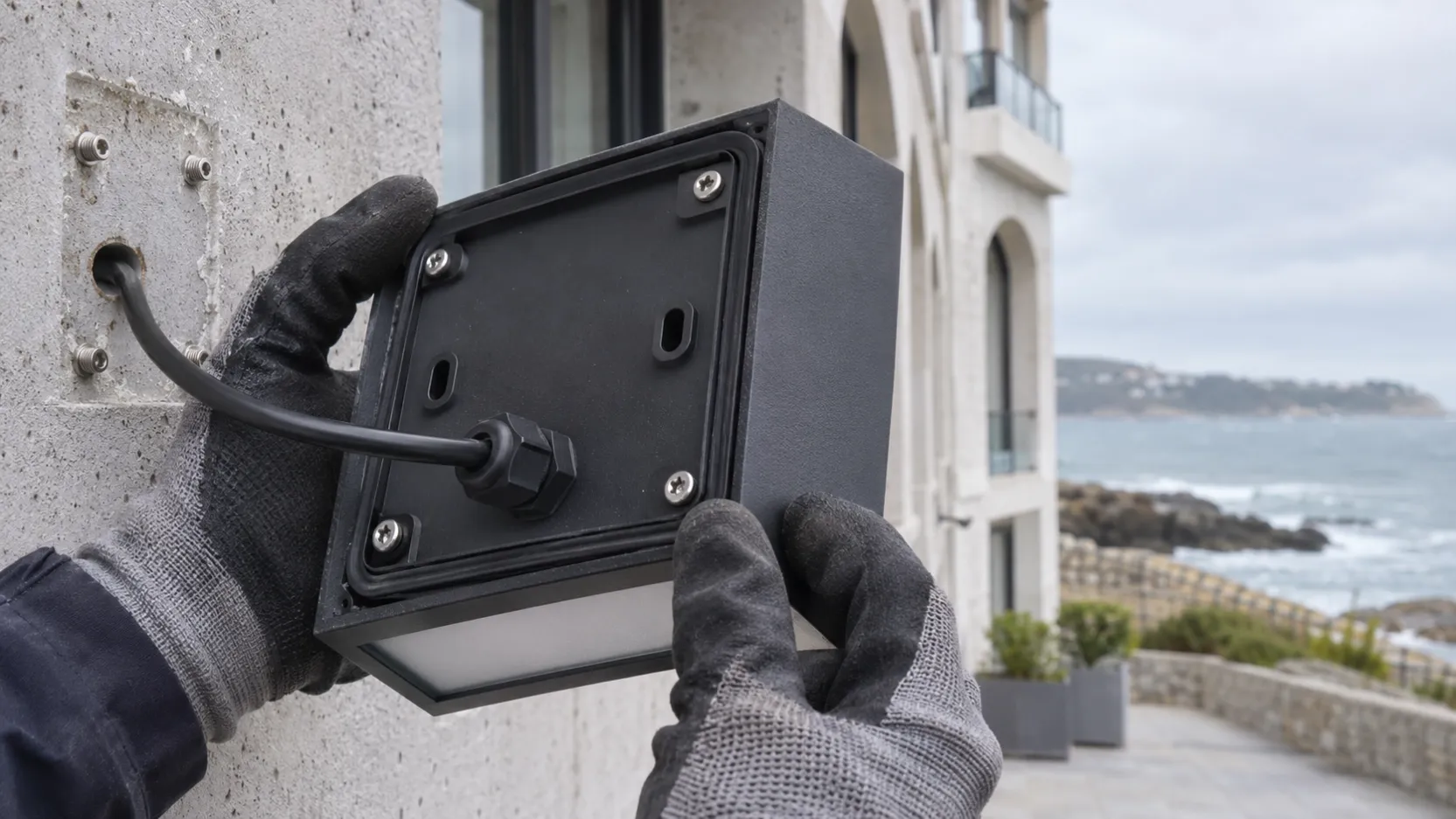
| Rear / mounting face | Gasket, bracket, cable entry |
| Side profile | Projection from the wall |
| Label / nameplate | Model, wattage, CCT, IP rating |
| In situ on a wall | Beam pattern on a real surface |
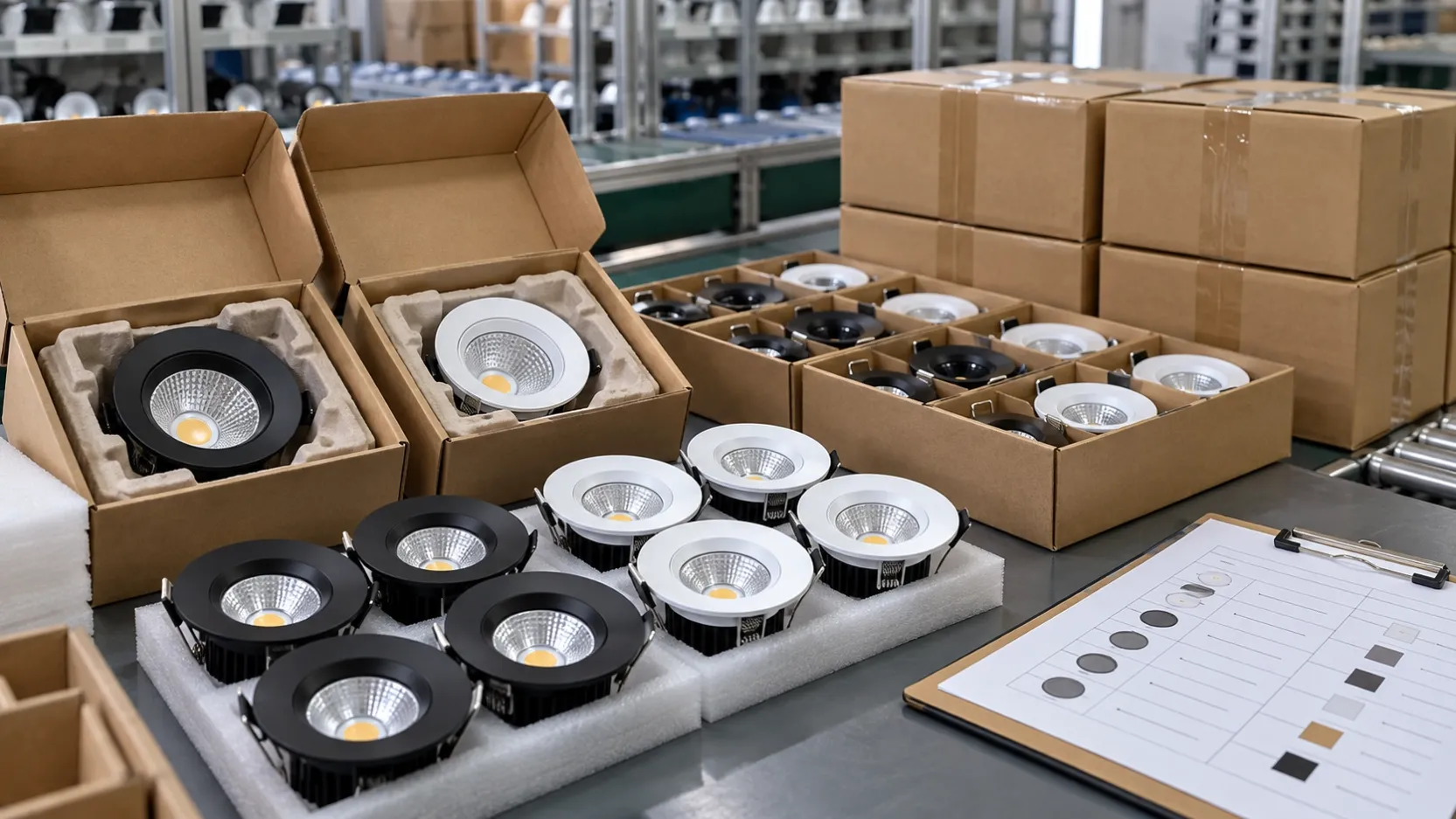
| Carton and packaging | Protection and labelling |
A rear-facing photo is the most informative single image. It shows whether the gasket is continuous, how the cable enters, and whether the mounting plate is flat.
What can photos not confirm?
- Cut-out and depth — only a dimensioned drawing proves these
- Beam distribution — a photo shows one exposure, not a light pattern
- CCT and binning — camera white balance hides small differences
- Dimming behaviour — flicker does not appear in a still image
- Sealing quality — a gasket can look correct and still not compress
- Driver model — often not visible at all
This is why a photo review is the first step, not the decision. It narrows the shortlist; it cannot approve a fixture.
What should be checked before requesting samples?
- Does the finish in the photo match the project palette?
- Can you see the rear gasket and cable entry?
- Is the mounting plate flat, or does it have raised sections?
- Does the label show a model number that appears on the quotation?
- Is there a photo of the fixture on a wall, not only on white?
- Is the scale clear — is there a tape measure or a known object?
How should a photo set be requested?
| Request | Reason |
|---|---|
| Six angles minimum | Front, rear, side, top, label, in situ |
| Fixed white balance | So finishes can be compared |
| Same lighting across models | For a matched range |
| A tape measure in frame | Confirms scale |
| Unretouched files | Retouching hides defects |
Why does an in-situ photo matter?
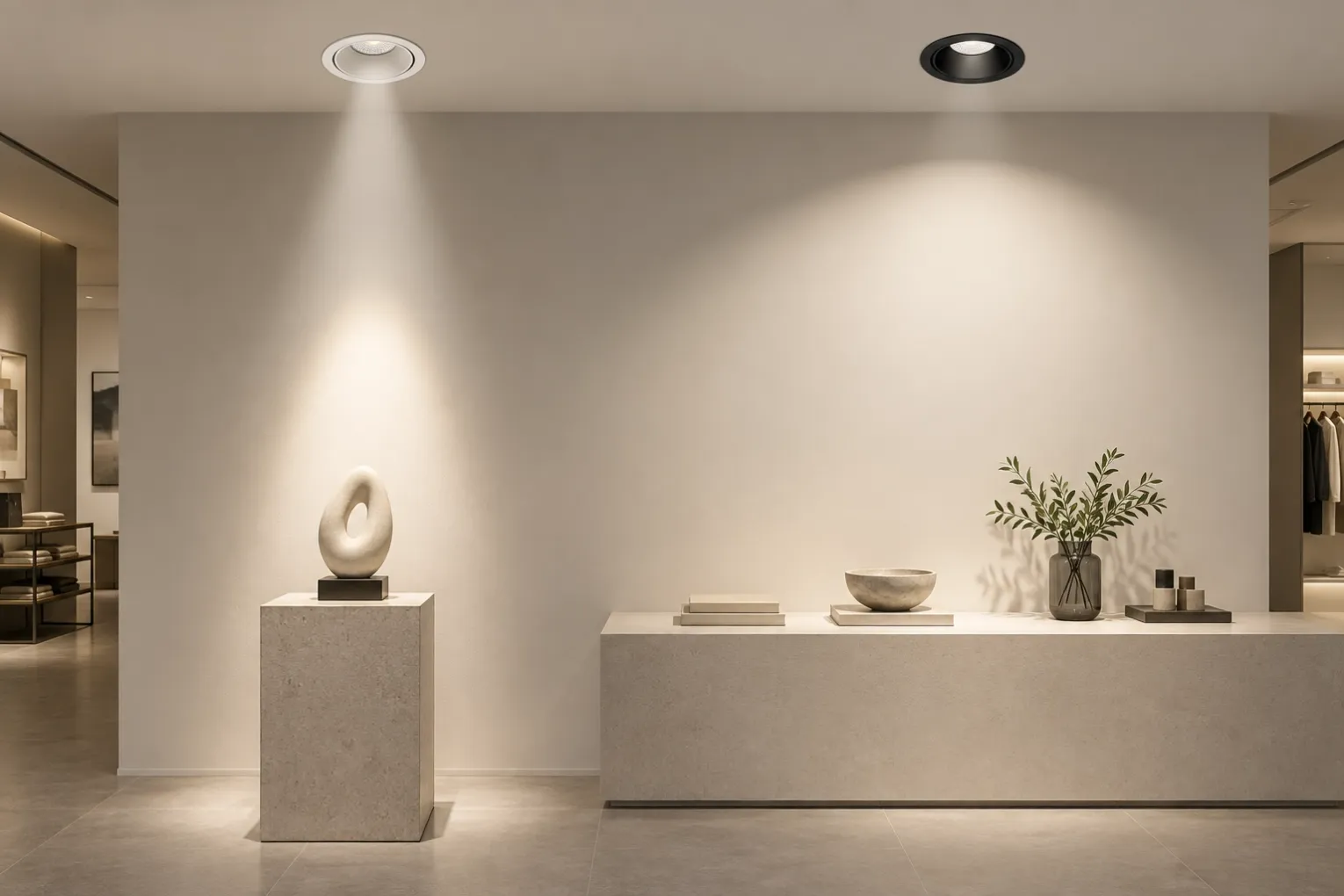
A fixture photographed on a white background tells you nothing about how it behaves on a wall. In-situ photos show the beam pattern, the spill, the glare and how the finish reads against the actual material.
They are still not a substitute for a sample on the real wall, but they are far better than a studio image for judging whether the design is close.
Which wall lights are commonly reviewed from photos?
The LED wall light range includes models where the rear detail decides the specification. Frequently requested for photo review:
- DB-LWL-A06AIP65 — adjustable IP65 wall light; rear bracket and gasket detail matter.
- DB-LWL-A03A — IP44 square up/down for covered positions.
- DB-LWL-A03DIP65 — decorative IP65 wall light where finish and shape drive the choice.
Request a photo set with rear views and in-situ shots, then order a sample for the facts photos cannot show.
Frequently asked questions
Can I approve a product from photos alone?
No. Approve the appearance from photos, then confirm fit, function and sealing from a sample.
Why do I need a rear photo?
The rear shows the gasket, bracket and cable entry — the parts that decide whether the fixture installs cleanly and stays dry.
Are rendered images acceptable?
For design intent, yes. For specification, no. Renders often show a beam pattern and finish the real product does not reproduce exactly.
What if the supplier only has studio photos?
Ask for an in-situ photo of a current installation, or order a sample. A supplier selling to projects should have site photos.
How many photos are enough?
Six angles plus one in-situ image covers most decisions. More studio shots of the same angle add nothing.