Can a Failed LED Driver Be Replaced Without Changing the Whole Downlight in Commercial Projects?
Learn when a downlight driver can be replaced separately and which electrical, mechanical and control details buyers should confirm before ordering.
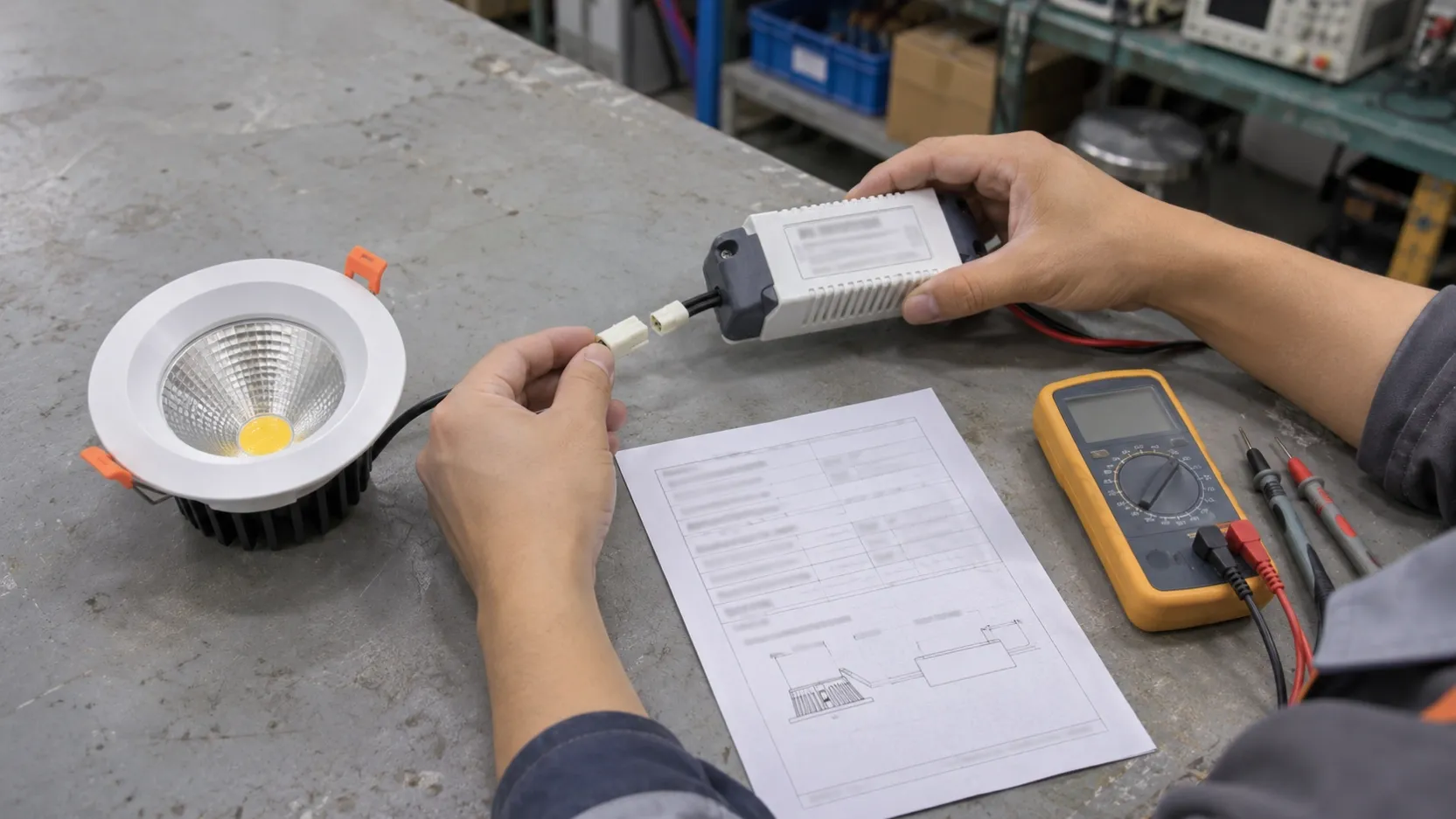
A failed LED driver can sometimes be replaced without changing the complete downlight, but only when the replacement matches the original electrical output, control method, connector, physical size and operating conditions. For contractors, wholesalers and project buyers, the important question is not simply whether the driver is external. It is whether the complete downlight remains accessible and serviceable after installation.
Before approving a project order, record the exact driver model and output specifications with the approved sample. If a fault occurs later, this information helps a qualified technician check the cause and identify a compatible replacement without immediately removing the complete fitting.
When can an LED driver be replaced separately?
A separate driver may be replaceable when it can be reached safely, disconnected without damaging the fitting and matched with a technically compatible replacement. The LED module, wiring, connector and luminaire body must also be in serviceable condition.
An external driver does not automatically make a downlight easy to repair. The replacement must provide the correct electrical output, support the same control method and fit within the available ceiling space.
Which driver specifications must match?
Is the downlight constant-current or constant-voltage?
Many COB downlights use constant-current drivers, but this must be confirmed from the approved specification or original driver label. A constant-current LED module requires the correct output current and an output-voltage range that covers the module's operating voltage. A constant-voltage driver should not be substituted unless the luminaire was designed for it.
Are the output current and voltage range compatible?
Matching wattage alone is not enough. Two drivers marked with the same wattage can have different output currents and voltage ranges. Using an unsuitable driver may change the light output, increase operating temperature, cause unstable performance or damage the LED module.
| Information to check | Why it matters |
|---|---|
| Driver type | Confirms whether the system uses constant current or constant voltage. |
| Output current | Incorrect current can alter light output, increase heat or damage the LED module. |
| Output-voltage range | The LED module's operating voltage must fall within this range. |
| Input voltage and frequency | They must suit the electrical supply in the destination market. |
| Control method | Non-dimmable, phase-cut, 0-10V and DALI drivers are not interchangeable controls. |
| Connector and polarity | These must suit the luminaire's wiring arrangement. |
| Driver dimensions | The replacement must pass through the access opening and fit in the ceiling void. |
| Temperature limits | The driver must operate within its specified ambient and case-temperature limits. |
Does the replacement support the same control system?
A non-dimmable driver cannot replace a DALI, 0-10V or phase-cut driver if the project must retain its original control function. Even when the LED output parameters match, an incompatible control interface can prevent dimming or cause unstable operation. Confirm the control protocol, wiring arrangement and required dimming range before selecting the replacement.
Why does ceiling access matter?
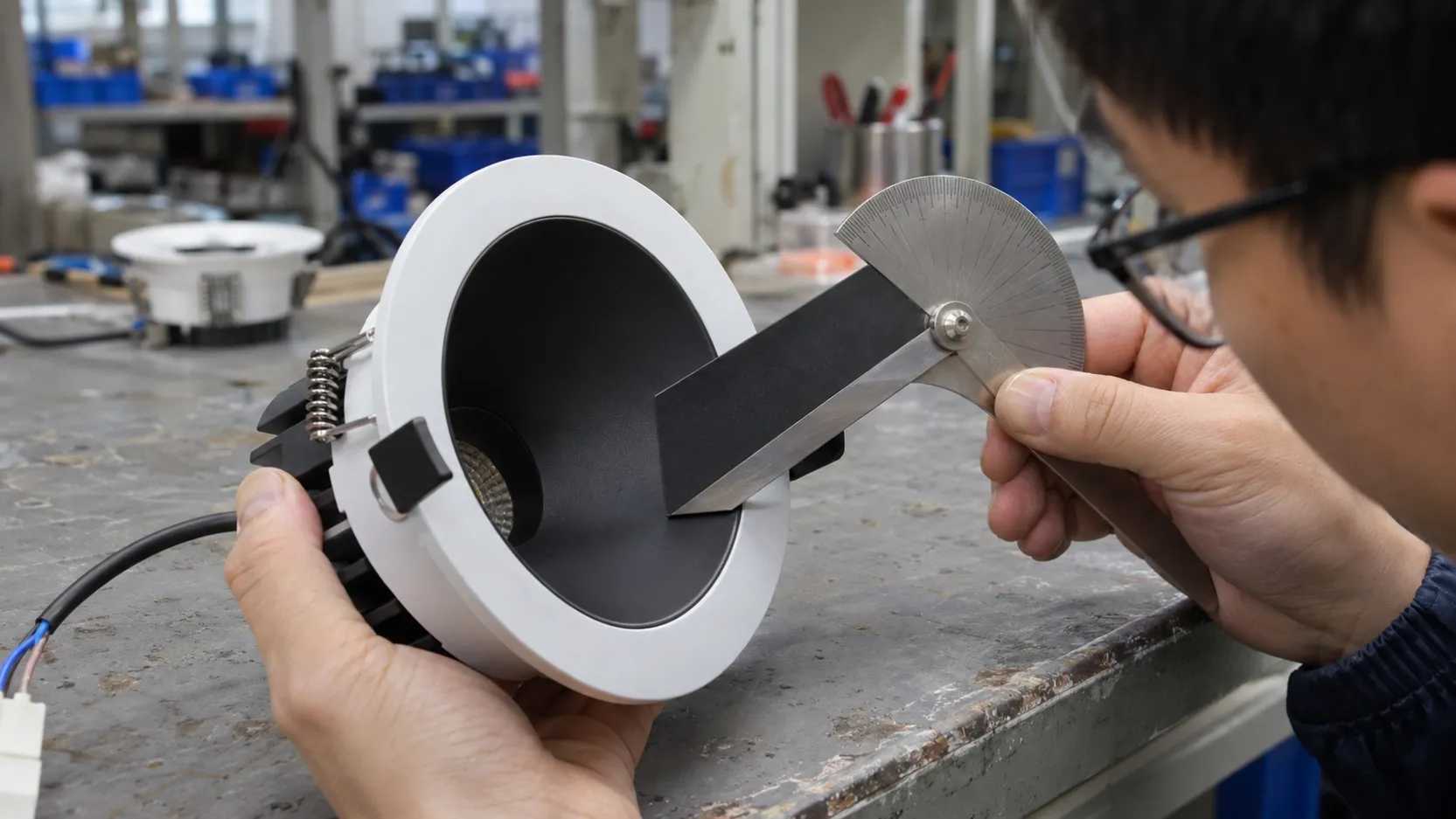
A technically compatible driver is of little practical use if it cannot be reached after the ceiling is closed. Before approving a downlight, check the cut-out diameter, ceiling depth, driver dimensions and planned maintenance route.
In some installations, the driver must pass through the downlight opening during installation and servicing. If it cannot pass through the opening and there is no access panel, replacing it may require opening the ceiling. This should be identified during product selection, not after installation.
Does flickering prove that the driver has failed?
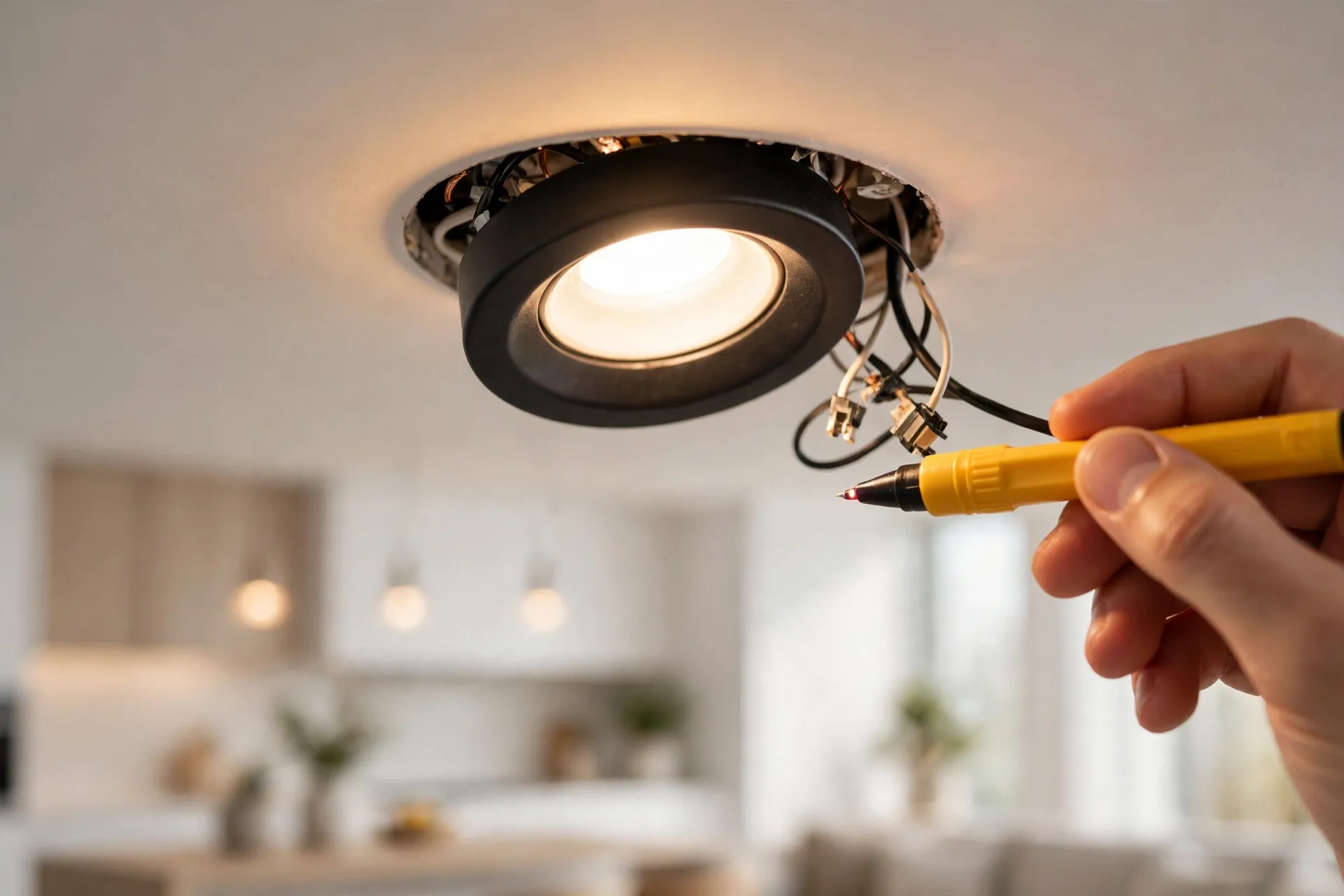
No. Flickering, delayed start or intermittent operation may indicate a driver problem, but these symptoms are not a complete diagnosis. Dimmer compatibility, control settings, supply voltage, loose connections, damaged wiring, the LED module and operating temperature can produce similar symptoms.
The driver should therefore be tested rather than replaced solely on the basis of visible symptoms. Inspection and electrical work should be completed by a qualified person after the circuit has been safely isolated.
What should B2B buyers request before approving a downlight?
For a sample or project order, request enough information to identify and maintain the approved configuration later. A driver brand by itself is not sufficient.
- Exact downlight and driver model
- Driver input and output specifications
- Dimming or control protocol
- Connector and wiring details
- Driver dimensions and installation requirements
- Applicable operating-temperature limits
- Warranty coverage for the driver and complete fitting
- Availability of the same or an approved compatible driver for future maintenance
Keep these details with the approved sample, specification sheet and order record. For projects using many identical downlights, buyers can also discuss a practical quantity of matching spare drivers based on the installation size, maintenance plan and future availability.
What information helps a supplier investigate a field fault?
A photograph of a dark fitting is rarely enough to identify the cause. Send the supplier the downlight model, order reference, quantity affected, installation date, supply voltage, control system and a clear photograph of the driver label. A short video can help show whether the problem is continuous flicker, delayed start or intermittent shutdown.
If one fitting is affected, a qualified technician can check whether the fault follows the driver, LED module or installation position. If several fittings on the same circuit are affected, the supply, control system and wiring should also be examined before assuming that several drivers failed at the same time.
How should buyers plan for easier downlight maintenance?
The lowest purchase price does not always produce the lowest maintenance cost. For hotels, retail stores, offices and other projects with repeated fittings, buyers should consider whether the driver is accessible, clearly identified and available as a separate service component.
Send DAYBREAK the required wattage, input voltage, control method, ceiling opening, ceiling depth, quantity and destination market. We can review suitable products from our commercial LED lighting range and confirm the driver arrangement before sampling or quotation.
Frequently Asked Questions
Can I replace an LED driver with another driver of the same wattage?
Not on wattage alone. The driver type, output current, output-voltage range, input supply, control method, connector, temperature limits and physical size must also be compatible.
Can a non-dimmable driver replace a DALI driver?
Not when the project must continue using DALI control. The replacement must support DALI and match the LED module's electrical requirements.
Does an external driver mean the downlight is easy to repair?
Not necessarily. The driver must be accessible through the ceiling opening or another maintenance route, and a compatible replacement must remain available.
Should a project order include spare LED drivers?
Spare drivers may be useful for projects with many identical fittings. The quantity should be based on the installation size, maintenance plan, driver availability and agreed warranty support.
What should I send when requesting a replacement driver?
Send the downlight model, driver-label photograph, input and output specifications, control method, connector details, order reference, fault description and project country. Do not select a replacement from wattage alone.