Product Engineering
Why Do LED Step Lights Stay Dimly Lit When Switched Off? Causes and Fixes
LED step lights glowing after switch-off are rarely a faulty light. Here are the real causes — leakage current, sensors and wiring — and when a sensor with a true relay output is the fix.
Why Do LED Step Lights Stay Dimly Lit When Switched Off? Causes and Fixes
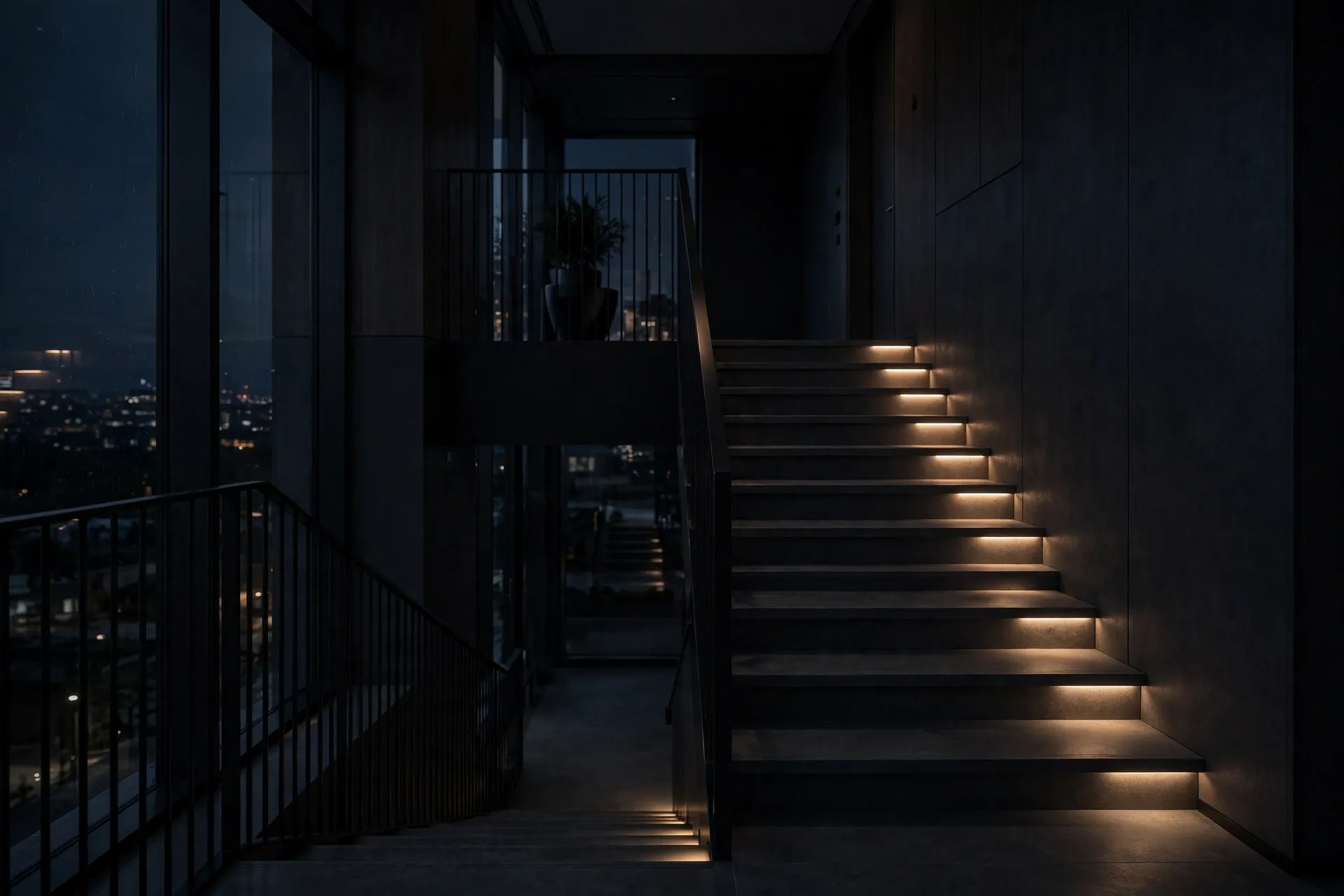
The lights are off. The switch is off. But the stairway still glows.
We hear this often from contractors and hotel engineers: the lights work fine in the day, then at night some never go fully dark. The first thought is “faulty lights, send replacements.” Usually they are not — LED step lights need very little power, so a tiny leakage current, sometimes under a milliamp, is enough to make them glow. A new light on the same circuit will glow in exactly the same way.
The usual causes
1. A switch with a built-in indicator light — its small lamp draws current through your lights.
2. PIR sensors, timers and no-neutral smart switches — they feed a standby current through the load.
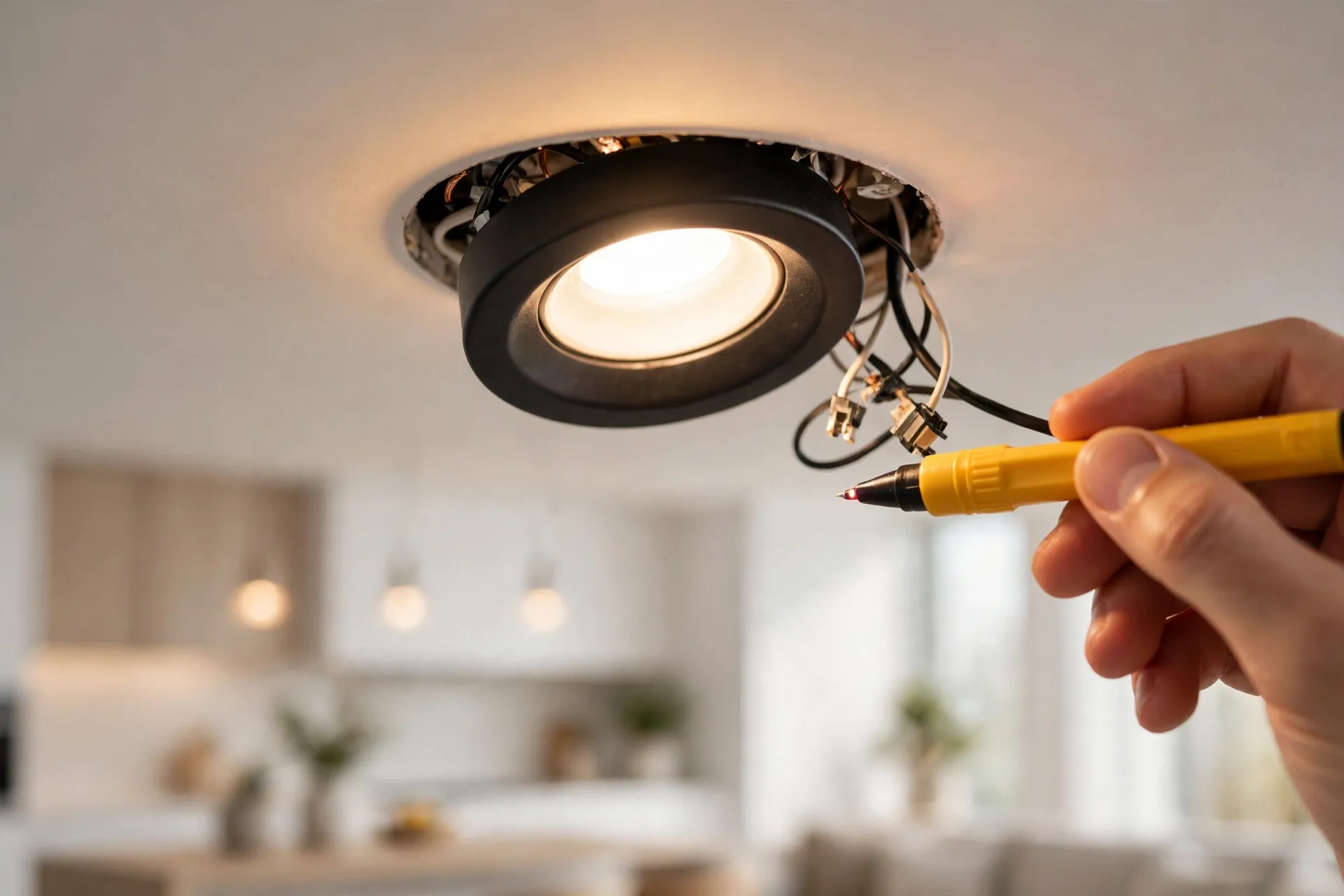
3. Live and neutral reversed — the switch cuts the neutral, leaving the fitting live; an electrician should fix this.
4. Long cable runs — a switched cable beside a live one can pick up a small induced voltage.
5. A genuinely faulty driver — it happens, just less often than people think.
Three quick checks
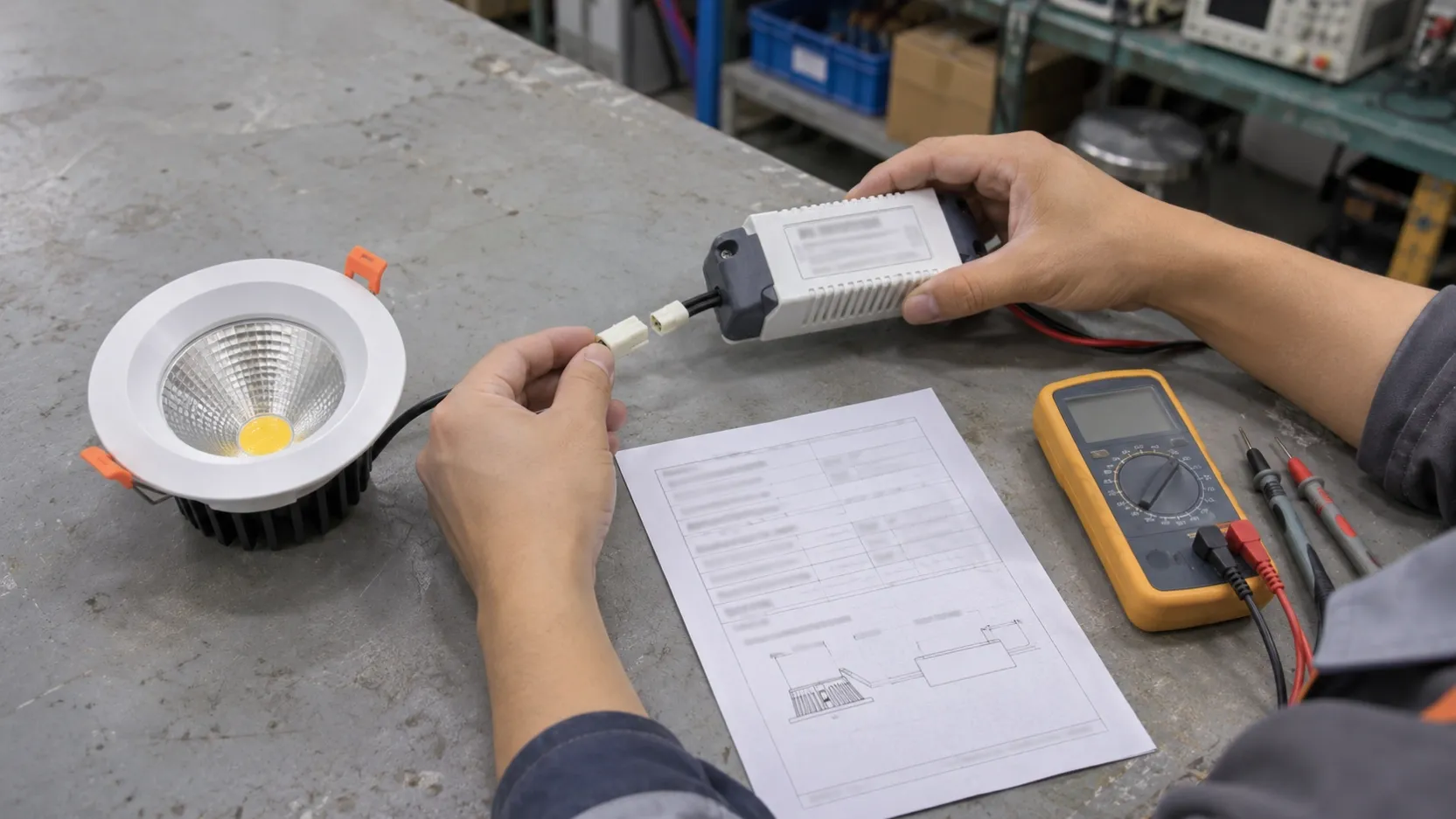
- Bench test: connect one glowing fitting to a plain supply and a plain switch. If it turns off cleanly, the light is fine — the cause is in the circuit. If it still glows, send us a video of the test for a warranty replacement.
- Try a plain switch with no indicator light — this alone solves many cases.
- Bypass any sensor or timer for one test. If the glow stops, the control device is the source.
Fixes: a plain switch, an RC snubber fitted by an electrician, corrected wiring, or a sensor with a true relay output. Our step lights are CE and RoHS certified, with a 3-year warranty — a genuine quality problem is replaced free of charge.
Planning a stairway project? Browse our LED step lights — for example our 1W recessed model DB-LSL-IP20-01S — and tell us what will control them. Send drawings or site photos to sophia@daybreaklight.com for a recommendation that switches off cleanly.