Which LED Wall Light Beam Pattern Works Best for Facade Projects?
Compare symmetrical, asymmetric, and multi-beam LED wall lights before choosing fixtures for a commercial facade or feature wall.
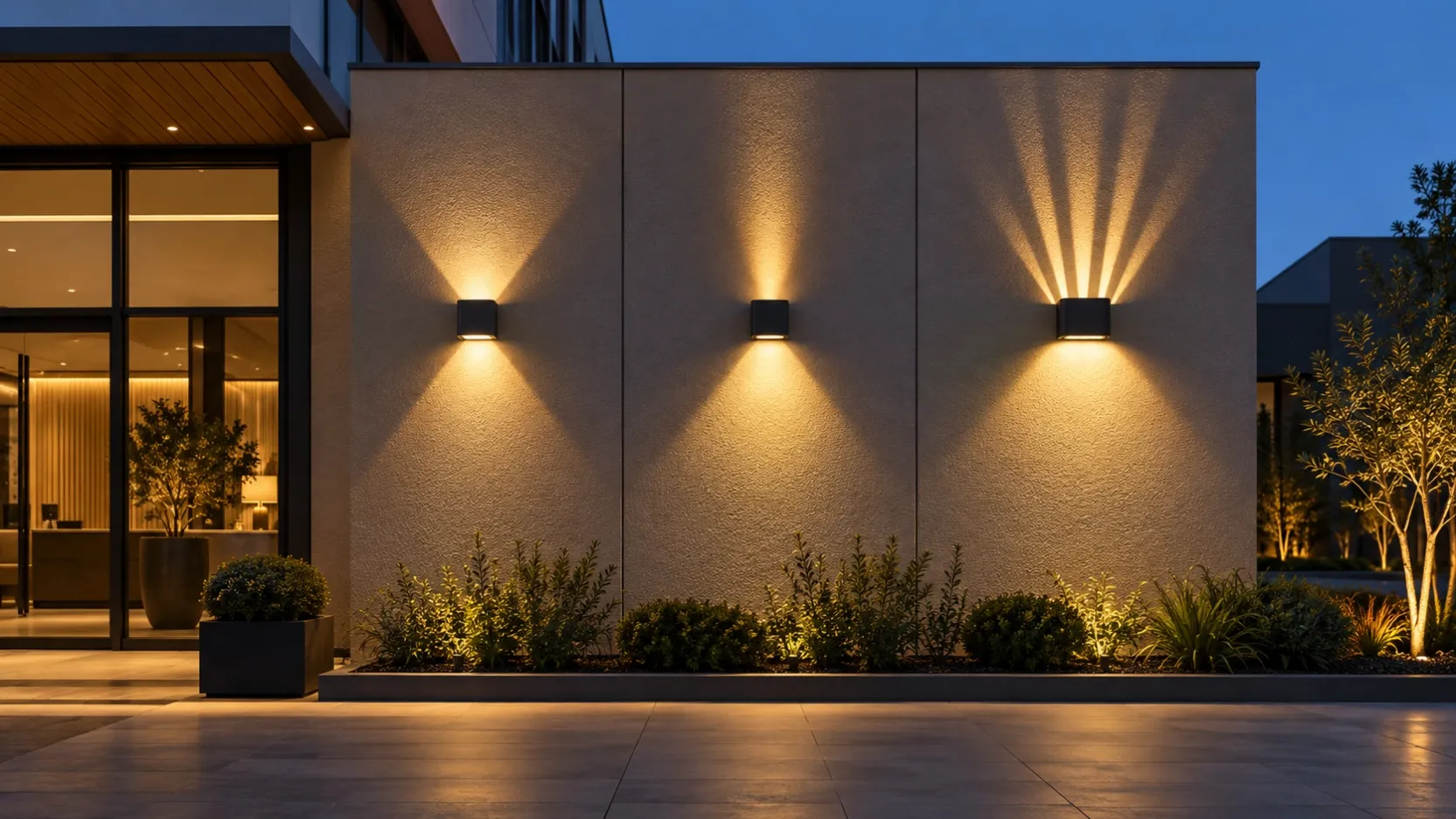
For a facade project, choose the beam pattern before the housing shape. Use a balanced up-and-down beam for rhythm, an asymmetric beam when one direction needs more emphasis, and a multi-beam effect for selected feature walls. The decision depends on the elevation, spacing and surface—not wattage alone.
When Does a Symmetrical Beam Work?
What result does it create?
Similar beams above and below create a calm repeated pattern. This suits entrances, columns and long walls with even spacing. Check whether windows, signs or wall joints will interrupt the light.
When Is an Asymmetric Beam Better?
Why use different upper and lower beams?
A narrow upper beam can emphasise height while a wider lower beam covers more wall. Confirm the correct mounting direction before approving the sample.
Where Does a Multi-Beam Light Fit?
Should it cover the whole facade?
Usually no. Decorative rays draw attention, so use them on selected bays, restaurants or feature entrances. Too many can make the elevation look busy.
What Should Buyers Send?
| Information | Purpose |
|---|---|
| Wall elevation | Shows positions and obstacles |
| Height and spacing | Helps assess beam overlap |
| Preferred effect | Guides sample selection |
Frequently Asked Questions
Can wattage predict the beam pattern?
No. The optical design and wall surface also affect it.
Does wall texture matter?
Yes. Rough, dark or reflective surfaces change the appearance.
Should samples be viewed at night?
Yes. Check them from the main approach before ordering.
Compare Beam Options
Browse our LED wall lights, including this multi-beam facade model. Send the elevation, mounting height, spacing and quantity for model review.