Cheap LED Lighting: What It Really Costs Your Project
See where cheap LED lighting hides cost: driver failures, thermal loss, colour variation and replacement labour. Compare total cost of ownership.
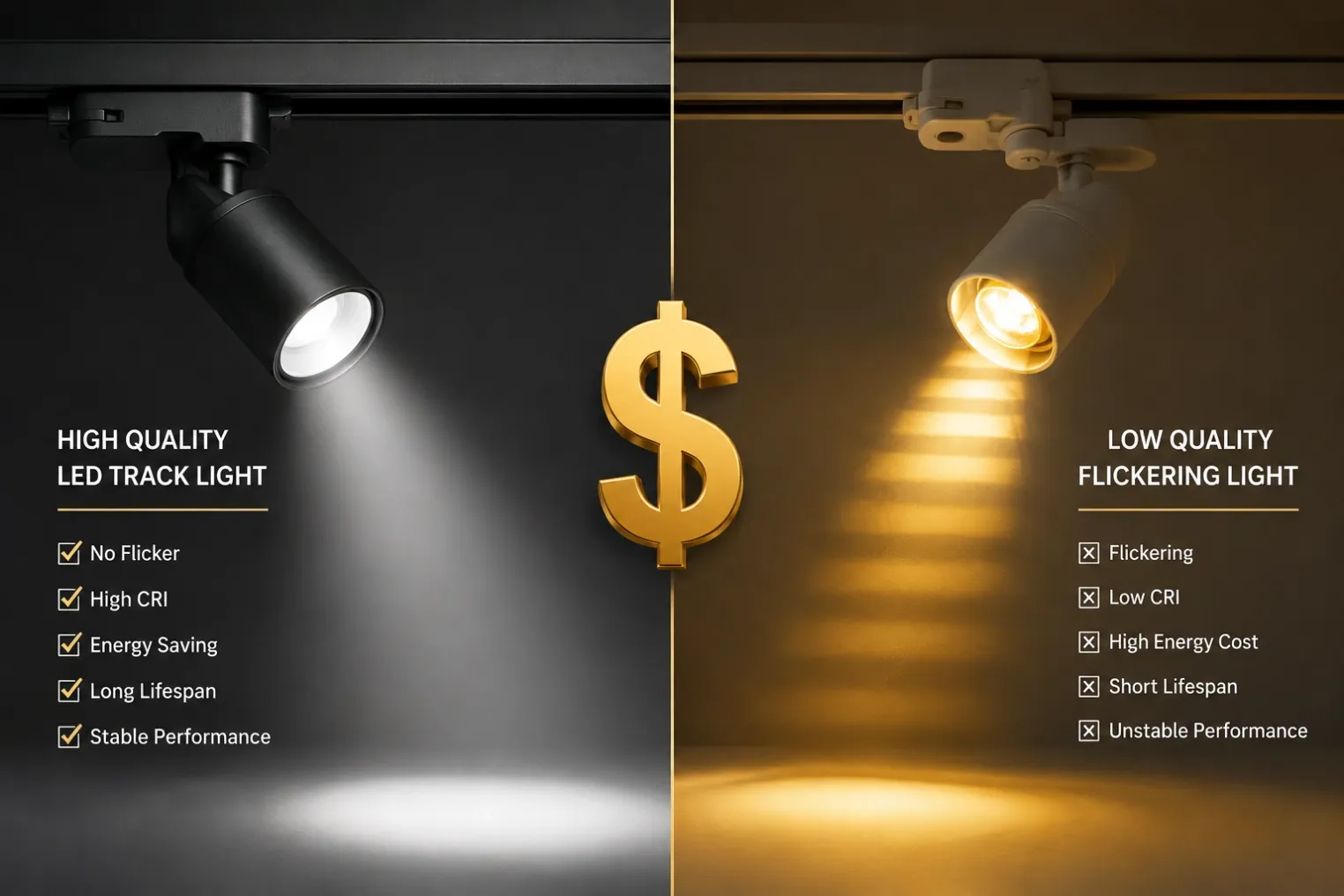
A commercial LED lighting project is rarely decided by unit price alone. The figure that matters is the total cost of owning the installation: the fixture, the driver, the labour to install it, the cost of replacing it early, and the disruption that replacement causes. A quotation that looks 20% cheaper can easily cost more over five years.
This guide sets out what to compare, which failures are predictable, and how to build a comparison that survives contact with a real project.
What does "cheap" actually mean in LED lighting?
Cheap usually shows up in one of five places, and each has a different consequence:
| Where cost is cut | What happens in service | Who notices |
|---|---|---|
| Driver quality | Flicker, early failure, dimming incompatibility | End user, facilities team |
| Thermal design | Output drop, colour shift, shortened life | End user over 1–2 years |
| LED binning | Visible colour variation between fixtures | Designer, client at handover |
| Housing and finish | Corrosion, paint failure, water ingress | Maintenance team |
| Assembly and QC | Loose connections, inconsistent units, early returns | Installer, distributor |
The important point is that none of these are visible in a photo or a unit price. They only appear after installation.
What costs should buyers compare?
A useful comparison starts with the same product and project requirements. If two quotations use different specifications or exclude different services, the unit prices are not directly comparable.
- Product scope: model, wattage, CCT, voltage, finish, optics and control requirements.
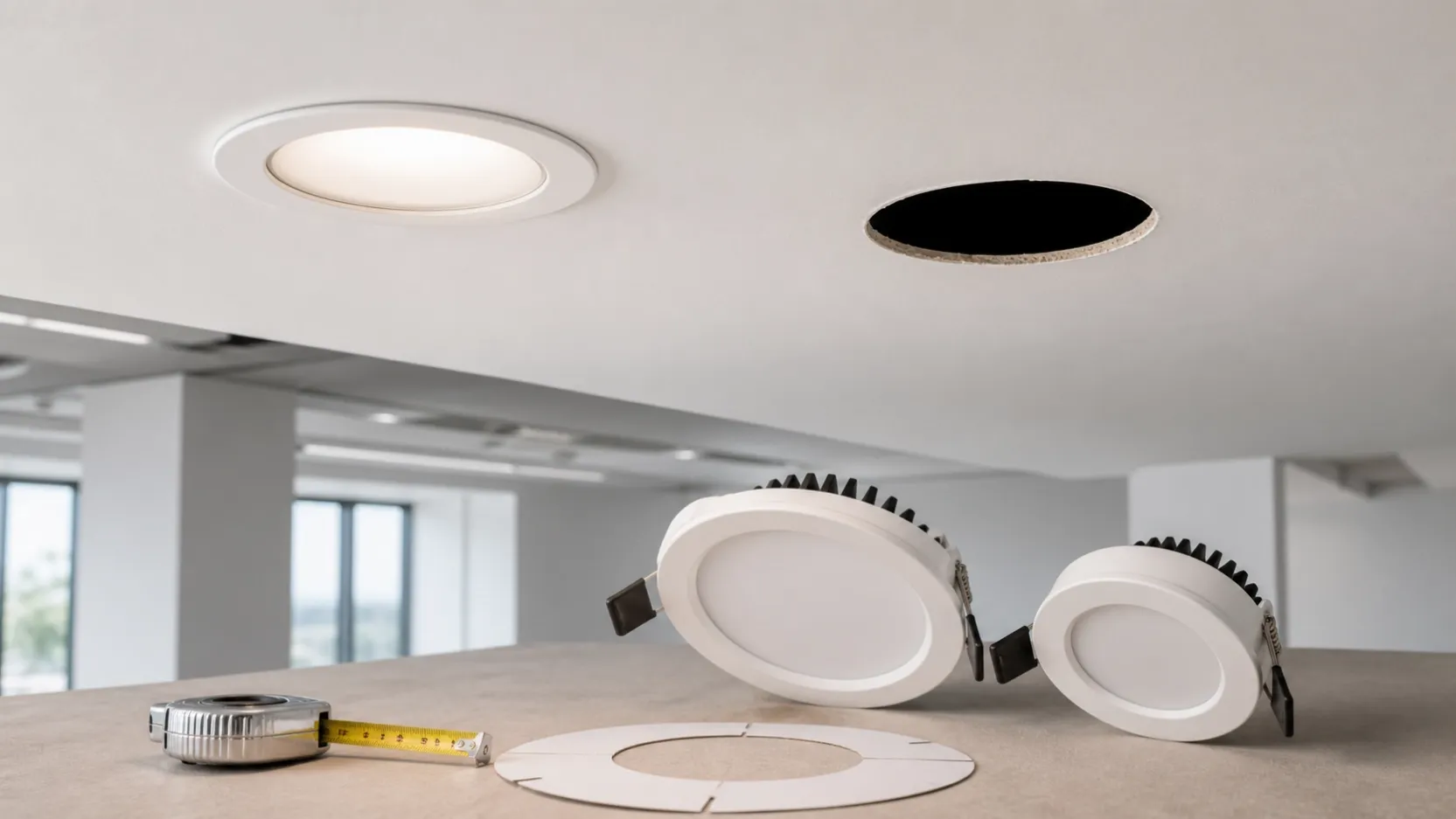
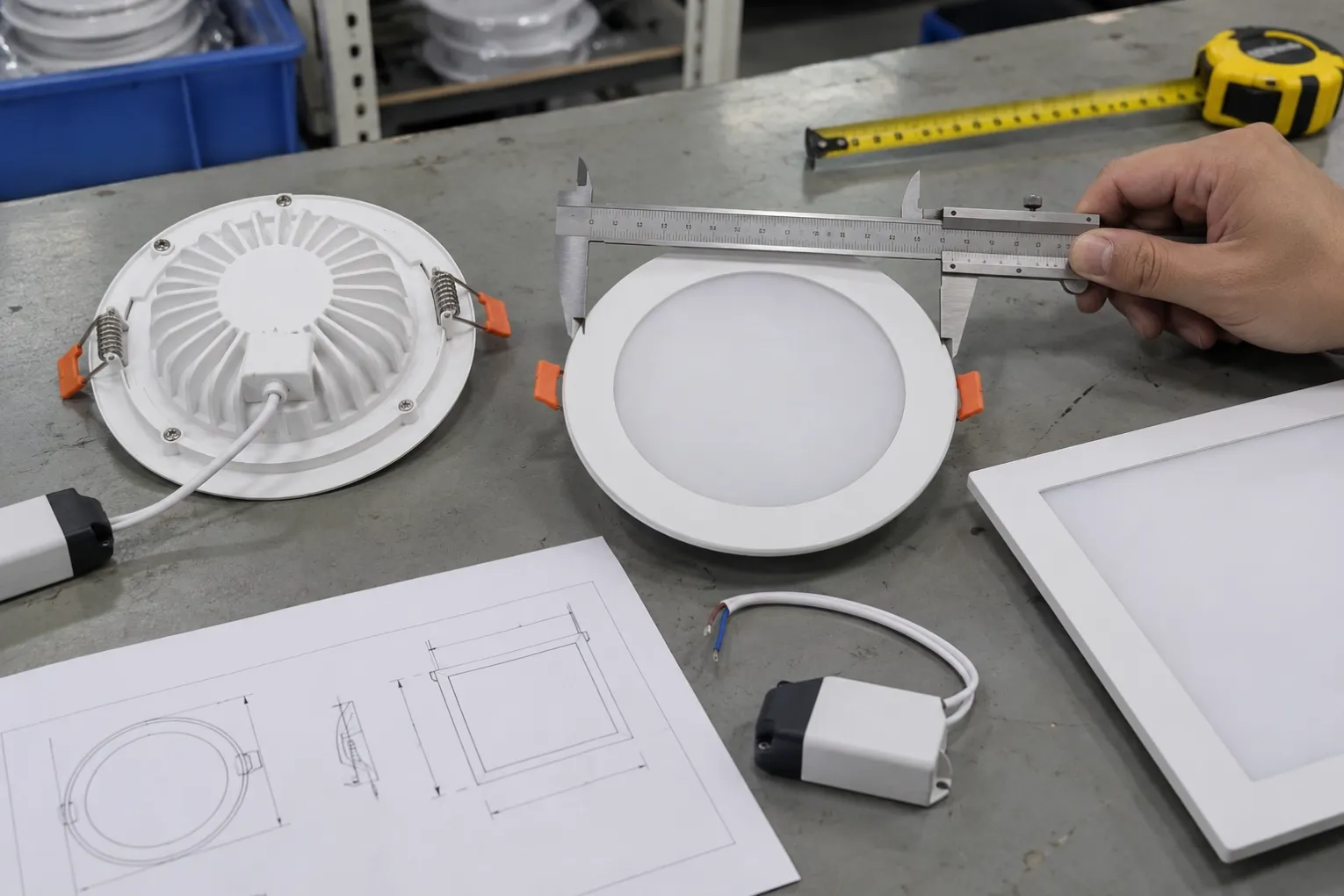
- Project fit: dimensions, cut-out or mounting details, cable entry and installation method.
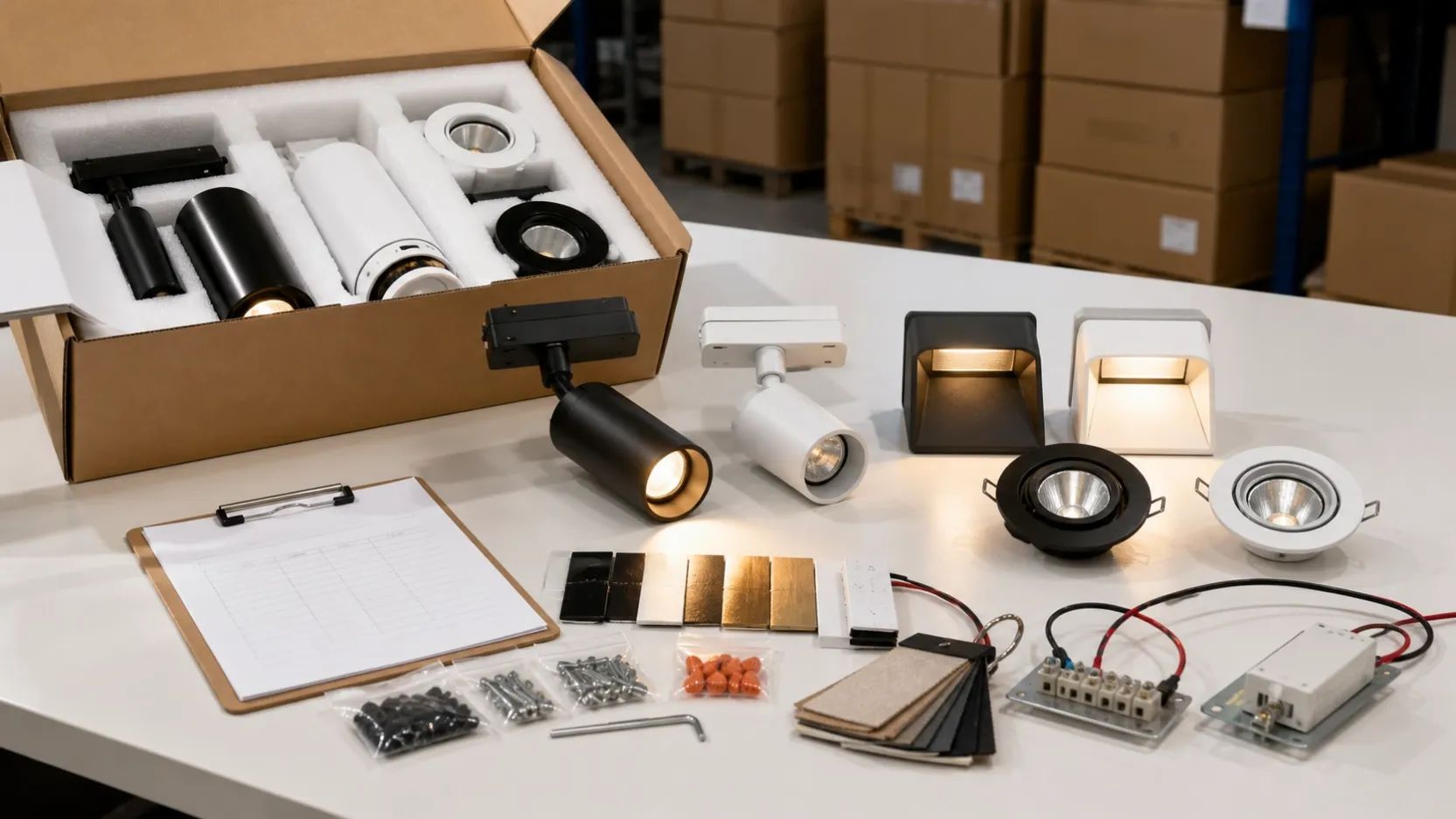
- Approval work: samples, drawings, finish references and written confirmation of the approved configuration.
- Order handling: packaging, model identification, quantity breakdown and shipment coordination.
- After-delivery coordination: traceable models and clear information for replacement or repeat orders.
How do you calculate total cost of ownership?
A workable formula for a five-year comparison:
TCO = purchase price + installation labour + expected replacements + maintenance visits + energy + disposal
Two examples show why the purchase price is a poor proxy:
| Scenario | Fixture A (cheap) | Fixture B (specified) |
|---|---|---|
| Unit price | Lower | Higher |
| Replacements over 5 years | Likely higher driver failure rate | Lower expected rate |
| Access equipment for replacement | Repeated cost on high ceilings | Avoided |
| Colour consistency | Mixed batches may be visible | Binned, consistent |
| Labour to redo failed units | Often the largest hidden line | Minimised |
On a high-ceiling hotel lobby or a retail ceiling with fixed shelving, the labour to reach one fixture can exceed the fixture price several times. That is where cheap becomes expensive.
Which failures are predictable?
Driver failure and flicker
The driver is usually the first component to fail, and the most common complaint after handover is flicker. Ask which driver brand and model is supplied, whether it is flicker-free, and whether the bulk order will use the same driver as the approved sample. Dimming compatibility should be tested with the actual dimmer on site, not assumed from a datasheet.
Thermal degradation
A compact fixture pushed to a high wattage in a small housing runs hot. Ask for the heatsink material and the rated output measured with the fixture fully assembled. Fixtures that are overdriven lose output and drift in colour within the first year, and the buyer usually discovers it after the defects liability period.
Colour and binning inconsistency
Colour variation is most obvious when fixtures sit side by side — which is exactly how wall lights, step lights and track lights are installed. Ask for the binning method and the tolerated CCT range, and compare several units from the same batch, not one sample.
Water ingress and corrosion
IP ratings describe the enclosure, not the quality of the gasket, the cable gland or the surface treatment. On coastal projects, standard powder coat can chalk and blister. Ask what the finish system is, not only the IP number.
Mechanical and installation issues
Cut-out tolerance, wall box fit, bracket strength and cable entry position cause more site problems than light output. A fixture that does not fit the opening is a delay, not a saving.
What should be confirmed before supplier selection?
Request the available product specification, dimensions and installation information for the selected model. For project orders, confirm the exact configuration in writing before production. Do not assume that a product photo or similar model represents the final approved item.
Where a sample is required, test it in the intended application. Review the visible finish, mounting arrangement, controls and lighting effect against the project requirements. Record any approved change so the order can follow the same reference.
A practical pre-order checklist:
- Driver brand, model and dimming protocol confirmed in writing
- Binning method and CCT tolerance stated
- IP rating plus gasket and finish system described
- Cut-out, wall box and cable entry dimensions verified on site
- Packaging, labels and master carton quantities agreed
- Warranty terms, including what happens to freight on a claim
- Sample serial number and photo set retained as the reference
How can buyers request comparable project pricing?
Send each supplier the same information: product type, quantity, application, project country, required specifications and delivery requirements. Include drawings or a fixture schedule when available. A clear enquiry allows suppliers to identify missing details before quoting.
Review our architectural and commercial LED lighting products, or send your fixture schedule for project review. You can also compare the four product families directly: LED wall lights, LED step lights, LED garden lights and commercial LED lighting.
Frequently asked questions about commercial LED lighting cost
Should buyers compare only the unit price?
No. Compare the exact product configuration, included documentation, packaging requirements and project support covered by each quotation.
What information helps suppliers quote accurately?
Provide the product type, quantity, wattage, CCT, voltage, finish, optics or beam requirement, control method, application and delivery destination when these details are available.
Should a project sample be approved before the main order?
Use the project approval process required by your team. When a sample is requested, record the accepted model, configuration, finish and installation details before placing the production order.
How should buyers compare quotations from different suppliers?
Prepare one fixture schedule or requirement list and ask every supplier to respond to the same fields. Mark exclusions, alternatives and missing information before comparing the totals.
Is a longer warranty always better?
Not automatically. Check what the warranty covers, whether the driver is included, and who pays freight on a replacement. A warranty that excludes the driver covers the least failure-prone part.
How many samples should be tested?
For project quantities, test at least three units from the same batch. One sample cannot reveal colour variation, adaptor tolerance or thermal behaviour across a run.