What Should Buyers Check in an LED Lighting Manufacturer’s Quality-Control Process?
Evaluating an LED lighting manufacturer? Review specification control, sample approval, production checks, final inspection and order traceability.

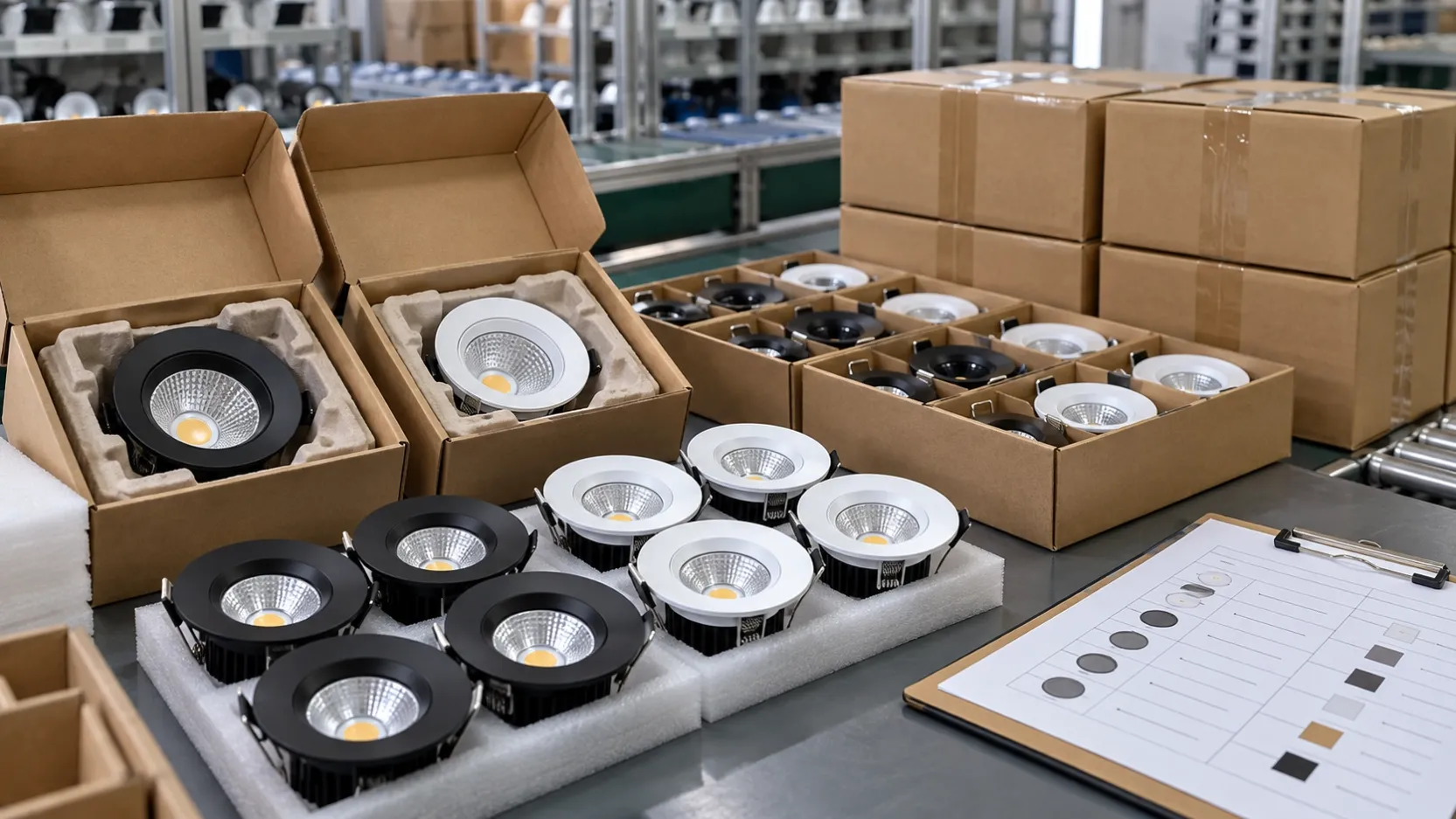
A manufacturer's quality system is verified through four checkpoints: incoming materials, in-process assembly, aging before packing, and final inspection against the approved sample. Certification documents prove a design was tested; only these four checkpoints prove the units you receive were built correctly.
Key facts about LED lighting quality control
- Certification is not quality control — it covers a tested sample, not each production unit.
- Aging before packing catches driver and assembly faults that a power-on check misses.
- Incoming inspection stops a bad component batch entering production.
- Final inspection must reference the approved sample, not a datasheet.
- Records prove the checks happened; verbal assurance does not.
What should be confirmed before production?
| Item | Why |
|---|---|
| Approved sample reference | Production must match a physical unit |
| Specification sheet | Wattage, CCT, beam, driver, finish |
| Compliance documents | Matching the ordered configuration |
| Packaging and labelling | Artwork approved before printing |
| Inspection plan | What is checked, by whom, at which stage |
An order without an inspection plan usually gets one: whoever opens the carton on site.
How should incoming materials be reviewed?
Most failures trace back to a component, not to assembly. Incoming inspection should cover the parts that decide failure:
- LED and driver batch — part number, binning, supplier
- Housing and finish — colour, coating thickness, defects
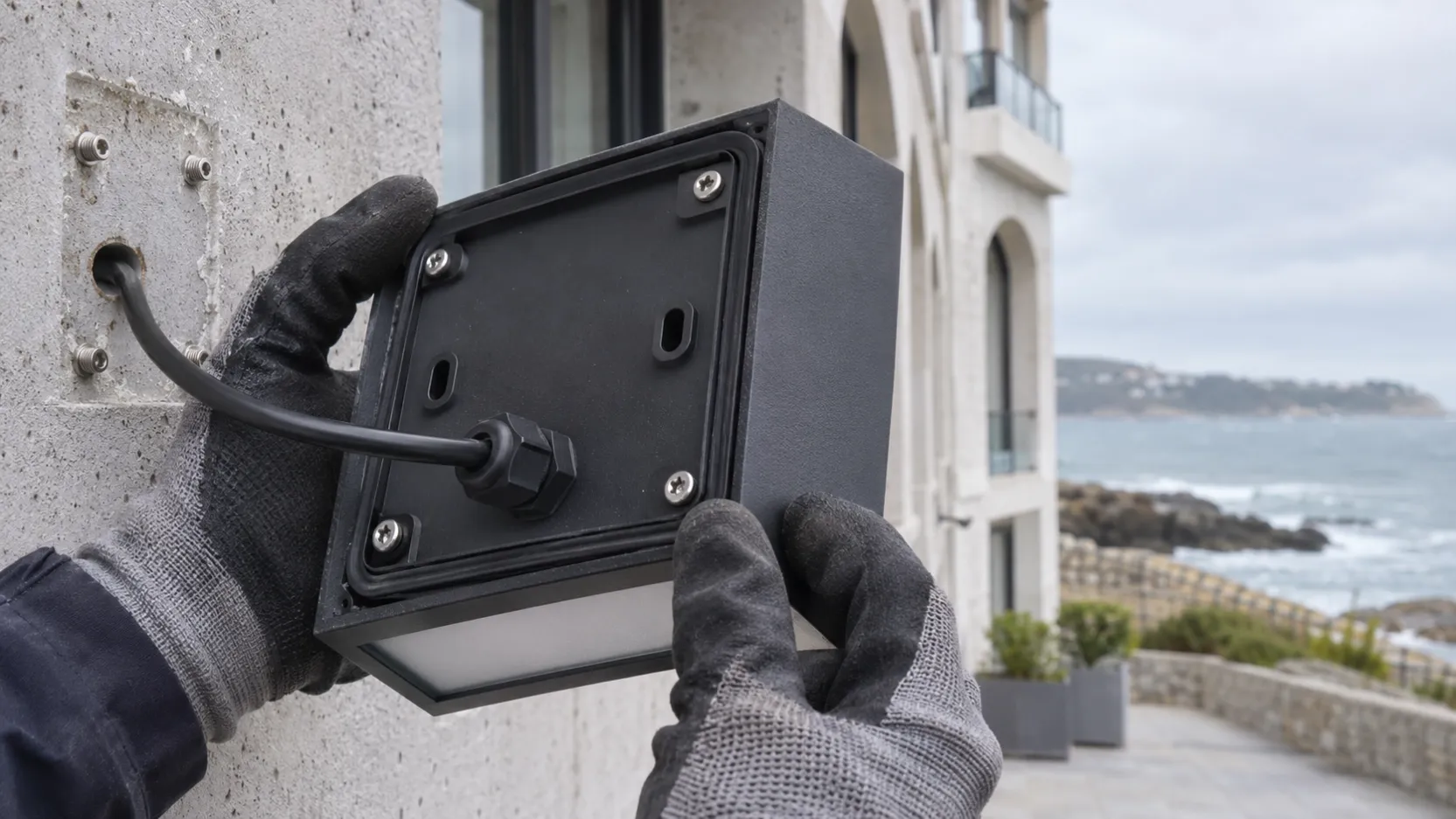
- Gaskets and glands — material, dimensions, compression
- Electronics — capacitors, connectors, wiring gauge
- Hardware — screws, brackets, springs
A change of driver supplier mid-production is one of the most common causes of inconsistent performance across a batch.
What should be checked during production?
| Stage | Check |
|---|---|
| First unit | Compared against the approved sample |
| Assembly | Gasket seating, gland tightness, screw torque |
| Electrical | Continuity, polarity, earth connection |
| Optical | Beam and colour match within the run |
| Labelling | Matches the approved artwork |
The first-unit check is the highest-value control in the process. If it is skipped, an entire batch can be built to the wrong specification.
What should final inspection cover?
- Appearance — finish, scratches, colour consistency across units
- Function — power-on, dimming, sensor behaviour where fitted
- Aging result — units that passed burn-in, not just powered
- Specification — wattage, CCT, beam against the sample
- Packaging — carton, label, accessories, manual
- Documentation — compliance documents matched to the shipment
Why does aging test matter?
A fixture that lights up on the bench may fail after twenty minutes of heat soak. Aging — running units for a set period before packing — reveals driver faults that only appear when warm, assembly problems such as loose connectors, thermal weaknesses in the housing, and colour shift in early LED batches.
Ask how long the aging runs, how many units per batch are sampled, and what happens to failures.
How should records be requested?
| Record | What it proves |
|---|---|
| Incoming inspection log | Components were checked |
| First-unit approval photo | The line started correctly |
| Aging test record | Units ran before packing |
| Final inspection report | A sample was checked against the order |
| Packing list | Quantities and cartons match |
These do not need to be elaborate. A dated photo and a short form are enough to show a process exists.
Which product ranges follow this process?
The LED wall lights, step lights, garden bollards and commercial lighting ranges follow the same inspection sequence. Send the specification and quantity, and we will confirm the inspection points that apply to that model.
Frequently asked questions
Does CE certification prove product quality?
No. CE indicates conformity of a tested sample to applicable directives. It does not confirm that each production unit is assembled correctly.
How many units are inspected per batch?
It depends on batch size and the manufacturer's sampling plan. Ask for the plan and the acceptance criteria rather than a percentage alone.
Is aging test done on every unit?
Not usually. Many factories age every unit for a short period, or sample a proportion for a longer burn-in. Confirm which applies.
What is the most common quality failure?
Driver-related faults and sealing problems. Both appear after heat cycling rather than at first power-on, which is why aging and moisture testing matter.
Can a buyer request third-party inspection?
Yes, and it is common on larger orders. Confirm the inspection company, the standard, and who pays for it in the order terms.