How Many OEM Spotlights Should Distributors Order for a Trial?
A practical trial is two or three versions, not ten — order enough to test on site and check colour consistency, without committing to stock that may not sell.
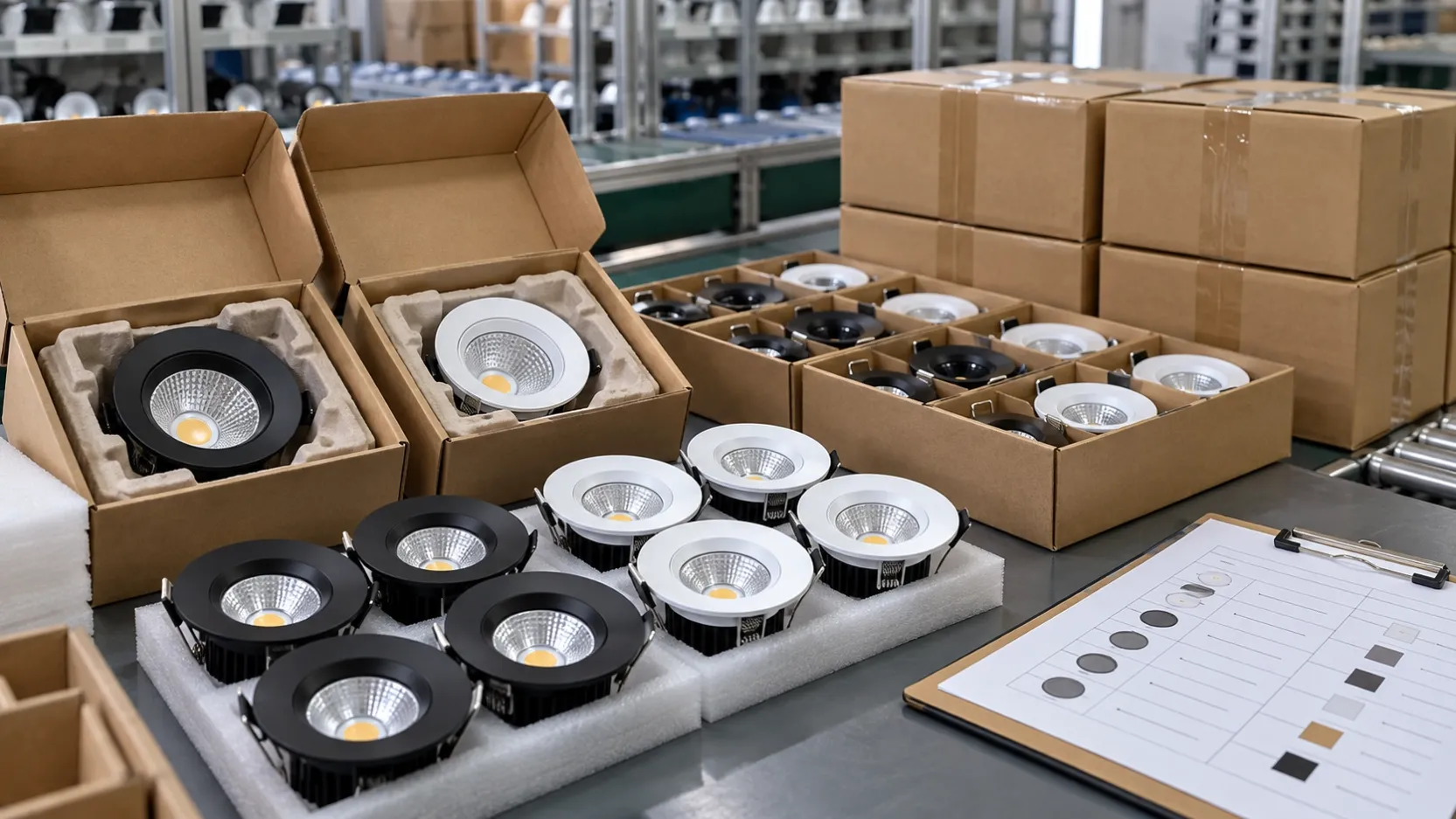
A practical OEM spotlight trial is two or three versions, not ten. Order enough units to test on site, to assess colour consistency across a batch, and to check how the carton quantity fits the buyer's warehouse — without committing to stock that may not sell.
Key facts about planning spotlight trial quantities
- Two or three versions covers most decisions: one beam angle, one CCT, one finish.
- Order at least three units per version to judge colour consistency.
- Carton quantity drives cost. A trial below one master carton often pays a higher unit price.
- Spares matter. Keeping one unit untouched gives a reference for later batches.
- Minimum order is 10 pcs per model — enough for a genuine trial without a container.
How many spotlight versions should you test?
| Version | What it tests | Suggested qty |
|---|---|---|
| Primary candidate | Fits the application and the ceiling detail | 3–6 pcs |
| Alternative beam | Compares accent vs wash on the real surface | 3 pcs |
| Alternative finish | Matches the ceiling and interior palette | 2–3 pcs |
| Reference unit | Kept untouched for later comparison | 1 pc |
More versions do not produce a better decision. They produce more unopened boxes. Narrow the range to the options that could actually ship, then test those properly.
Why should carton quantity be checked?
Spotlights are usually packed in fixed quantities per master carton — often 20, 30 or 50 pieces. A trial order below one carton can mean:
- Higher unit price, because the factory repacks by hand
- Mixed packaging that does not represent the bulk delivery
- No realistic test of how the product arrives
Ask for the master carton quantity and the per-carton price before deciding the trial size. Sometimes ordering exactly one carton is cheaper per unit than ordering 15 pieces.
How should the trial be structured?
- Fix the specification — beam angle, CCT, finish, driver, cut-out.
- Order the smallest sensible quantity for each version, at least one carton where practical.
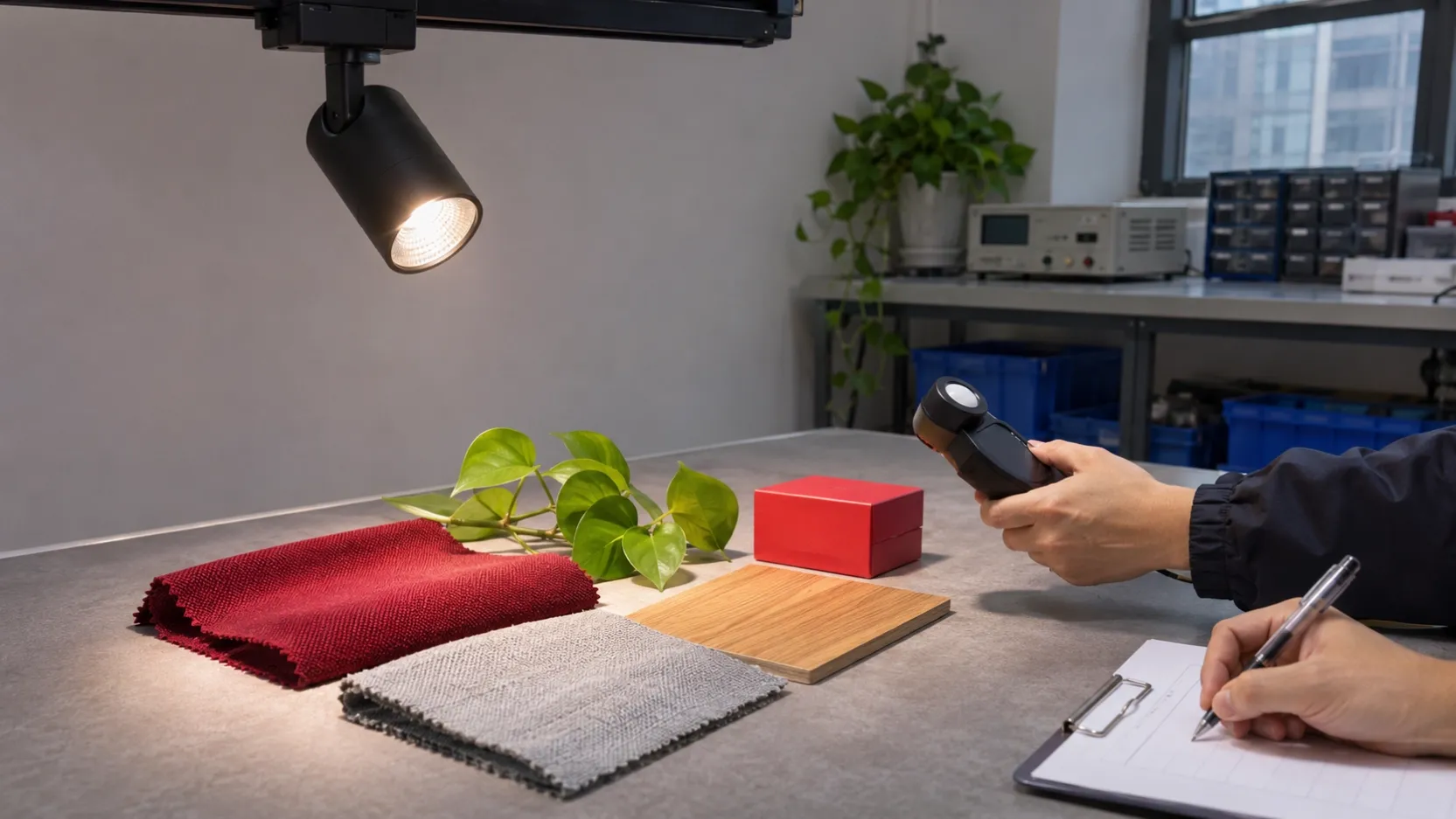
- Install on site at the real height, not on a bench.
- Compare three units side by side for colour and beam consistency.
- Keep one unit sealed as the reference for the bulk order.
- Record results before ordering more.
What should appear on the final order list?
| Item | Why |
|---|---|
| Model and beam angle | Prevents substitution in bulk |
| CCT and binning | Colour consistency across the run |
| Finish code | Matches the approved sample |
| Driver model | The most common failure point |
| Cut-out size | Site preparation cannot change later |
| Carton quantity | Drives unit price and handling |
| Trial quantity and version split | Defines what was actually tested |
How does the trial connect to the bulk order?
The trial is only useful if the bulk order repeats it exactly. Record the trial specification, keep a reference unit, and write the same details into the production order. A trial approved by eye but not written down tends to drift.
A practical rule: if the bulk order cannot be described using the same fields as the trial, the specification is not finished.
Which spotlights suit a distribution trial?
The commercial LED lighting range covers recessed COB spotlights in several beam angles and finishes. Frequently trialled models:
- DB-DL6A — 24° deep recessed pinhole spotlight, low glare.
- DB-DL10D — adjustable 60° COB downlight with Lifud driver.
- DB-TL20-M05 — zoomable 15°–60°, useful when the beam must stay flexible.
Frequently asked questions
What is the minimum quantity for an OEM spotlight trial?
10 pcs per model. For a genuine test, order the smallest quantity that still allows three units to be compared side by side.
Is one master carton better than a mixed trial?
Often yes. One carton represents real packaging and usually gives a better unit price than a repacked trial quantity.
Should each version be ordered in the same quantity?
No. Order more of the likely winner and fewer of the alternatives. The trial is for deciding, not for stocking.
How many spares should be kept?
Keep at least one untouched unit from the trial batch as a reference, plus a small number from the bulk run for later replacement.